
Sony FX3 II: Rumors, Wishlist, and Buying Advice
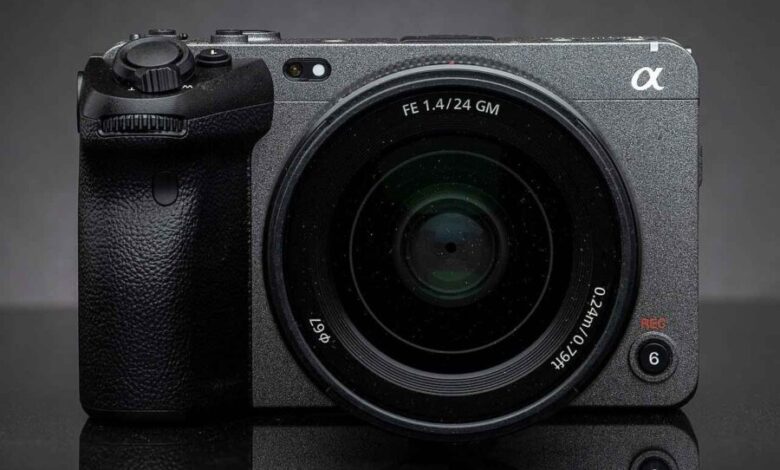
Let’s talk about the sony fx3 ii the way most people are actually thinking about it right now: with a mix of excitement, skepticism, and a quiet fear of buying the “old” model right before something new drops.
And yes, that’s a real feeling—especially if you’re a working shooter and your gear budget isn’t infinite.
One important thing upfront: as of today, Sony has not published an official announcement page or spec sheet for an “FX3 II.”So what’s ranking in Google tends to fall into two camps: rumor analysis (often based on registrations and connectivity clues) and “here’s what I want” wishlists from filmmakers.Both can be useful. Both can also get weirdly overconfident if you read too fast.
This guide is meant to be the calm center of that storm.It separates what’s confirmable from what’s possible, and then it does the more practical part: how to decide whether to buy an FX3 now, wait, or pick a different tool entirely.
Who this is for (and who it isn’t)
This is for solo shooters, small production teams, and working creators—wedding and event filmmakers, documentary folks, corporate interview crews, YouTubers who now have clients—anyone who needs reliable video gear and doesn’t have the luxury of waiting forever.
If you’re here mainly for drama (“leaks confirmed!!”), this won’t be that.And if you want a single definitive spec list for the Sony FX3 II… honestly, nobody can responsibly give you that until Sony does.
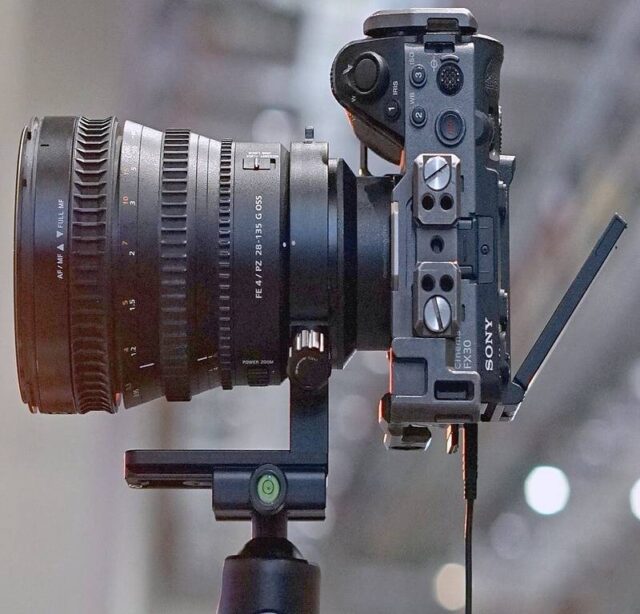
What “sony fx3 ii” means right now
At the moment, “sony fx3 ii” is more of a search intent than a confirmed product: people want to know what might be coming, what upgrades matter, and whether waiting is smart.That’s why so many articles lean on “analysis” and “predictions.”
A good example is the rumor-analysis style post that points to Sony registering new camera codes in Asia and then discusses what those codes could represent.The core claim is reasonable: registrations can hint that hardware is on the way.But the dangerous part is what comes next—turning connectivity notes into assumed headline video specs, release windows, or sensor choices.It’s interesting, sure, but it’s still a chain of inference.
To keep yourself grounded, it helps to use a simple rule:
If it isn’t on an official Sony product page, a Sony press release, or a manual/firmware download tied to a real model name, treat it as unconfirmed.
If you want a quick refresher on how to judge rumor quality without becoming cynical, the cluster post here helps: Sony FX3 II rumors: how to judge what’s real.
The current FX3 baseline (because upgrades only matter in context)
Before deciding what you want from an FX3 II, it’s worth being clear about what the current FX3 was designed to be.Sony positioned FX3 as a compact, full-frame Cinema Line camera aimed at creators and small crews, mphasizing a “cinematic look” and usability for run-and-gun production.That intent matters: it frames what Sony is likely to protect (size, mounting points, video-first ergonomics) versus what they might change.
This is also where a lot of “FX3 II” conversations quietly go wrong.People ask for upgrades that are totally valid in isolation… but might push the camera into a different product tier, price point, or thermal envelope.And then we’re not talking about an FX3 successor anymore. We’re talking about something closer to an FX6-style philosophy.
If you want the grounded, confirmed baseline—ports, recording options, and the practical stuff people forget—see: Sony FX3 specs: the baseline before FX3 II.That article is meant to be the “reality check” companion to this rumor-heavy topic.
What the rumor posts are actually using as “evidence”
Most serious-looking FX3 II rumor content isn’t built on “a guy said it on a forum.”It’s built on registrations: model codes that appear in regulatory databases with Wi‑Fi and connectivity characteristics.Those entries are public in a limited sense—meaning you may see things like Wi‑Fi standards, frequency bands, or transmission power.
This is the part that’s legitimately useful.If new codes appear, it often means new hardware is planned.But it’s also the part where people overreach, because those entries generally don’t hand you the fun stuff like “6K open gate” or “internal RAW.”
One widely circulated analysis argues that a registered code using Wi‑Fi 6E / 5.1GHz capabilities and other connectivity clues points toward a video-first body, and then stretches into predictions like 6K RAW readiness and 4K/120p workflows.
The writer also adds “insider information” suggesting FX3 II is more likely than an A7S IV in that window.
Again: interesting. Not a spec sheet.
In other words, registrations can tell you “something is coming,” and they might hint “it’s likely higher-end.”
They cannot reliably tell you: sensor resolution, codecs, heat management, rolling shutter performance, dynamic range, internal RAW, or price.
sony fx3 ii wishlist: upgrades that actually make sense
If you read filmmaker wishlists, you’ll see the same themes repeating.That repetition is meaningful.It tells you what pain points exist in real workflows, not just what looks good on a spec comparison chart.
TechRadar’s wishlist-style piece is a clean example of this genre: it calls for open gate / higher resolution, internal RAW, CFexpress Type B, stronger build/weather sealing, and 32-bit float audio, with a request not to remove mounting points and a “bonus” mention of false color.
Not everything in that list is equally likely, but most of it is understandable.
Open gate (or just more pixels) is about reframing, not ego
People ask for “open gate” because modern delivery is messy.You shoot one interview and the client wants horizontal for YouTube, vertical for Reels, maybe a square crop for a platform you didn’t even plan for.Open gate capture (or simply higher-resolution capture with a good oversampling path) gives you room to reframe without immediately feeling punished in post.
It’s also a stabilization thing.Even if you’re careful, the ability to stabilize a shot without sacrificing too much detail is quietly valuable—especially for events and documentary work where retakes are not an option.
There’s a dedicated deep-dive on this topic here: Open gate video: why FX3 II buyers want it.
Internal RAW: attractive, but it’s not “free”
Internal RAW is one of those requests that sounds simple until you live with it.More data means more heat, more storage cost, heavier offloads, and often more time in post.That’s not automatically bad—RAW can be wonderful.But for many working shooters, internal RAW is a sometimes-feature, not an always-feature.
This is where a mild contradiction shows up in real life.People (understandably) want internal RAW for maximum image flexibility.They also want small files, long record times, and a camera that never overheats in summer weddings.Those desires point in opposite directions.So if Sony ever adds internal RAW to an FX3 II class body, it will likely come with meaningful engineering tradeoffs.
CFexpress Type B: it’s mostly about cost and logistics
Wanting CFexpress Type B is often about standardization.Some crews already run Type B across other systems and would love one less media format to manage.There’s also a perception—sometimes fair—that Type B gives more headroom for higher-bitrate internal recording modes.
But here’s the practical bit: media isn’t just performance.It’s budget, redundancy, availability on a shoot day, and how fast you can offload while you’re tired and your client is waiting.A “better” card format on paper can still be a headache if it makes your kit harder to manage.
32-bit float audio: a genuine run-and-gun safety net
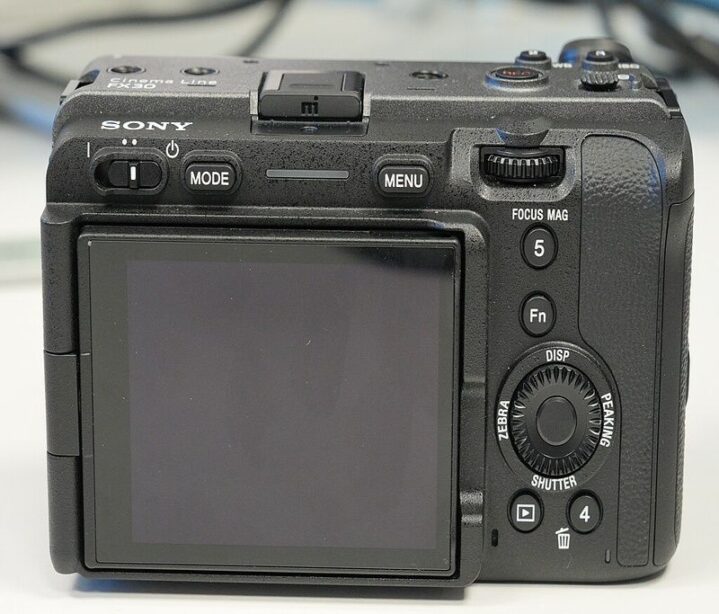
32-bit float audio keeps coming up because it protects you from unexpected peaks and fast-changing sound levels—exactly what happens in doc and event work.The dream is simple: fewer ruined takes because someone laughs louder than expected or suddenly raises their voice.
At the same time, it’s not magic.Bad mic placement, wind, RF issues, or a noisy room will still sound like bad mic placement, wind, RF issues, or a noisy room.So yes, it’s a meaningful upgrade request.No, it doesn’t replace good habits.
Tougher body and weather sealing: boring until it matters
Weather sealing is one of those “I didn’t care until I cared” features.Most shoots happen in normal conditions… until one doesn’t.And then you’re filming under a canopy, negotiating with light rain, and wondering why your camera bag doesn’t include a proper cover.So when people ask for a tougher build, it’s not glamour.It’s a quiet desire for fewer fragile moments on paid jobs.
False color and monitoring tools: small features, big confidence
False color is a workflow accelerant.It helps you expose faster, communicate exposure decisions more clearly, and work with less guesswork when lighting is changing.It’s not a headline spec, but it’s the kind of feature that makes a camera feel “pro” in the field.
What upgrades are plausible (and what feels like a leap)
This is the part where it’s tempting to overpromise, so let’s keep it honest.Some requests align nicely with the FX3 concept: better monitoring tools, improved usability, maybe a refined sensor/readout path, better heat management, incremental quality-of-life upgrades.
Those are plausible.
Other claims you’ll see—like “global shutter sensor,” “6K RAW over-the-air monitoring,” or a very specific release window—might happen, but they’re leaps unless they’re supported by official documentation.
Rumor sites sometimes connect these dots using Wi‑Fi throughput logic and product segmentation arguments.
Interesting logic, but still logic.
If you’re planning a purchase, the safest move is to treat “plausible” upgrades as nice if they happen and treat “leap” upgrades as not real until proven.It sounds conservative.It is conservative.But it’s also how you avoid planning your business around a product that may not land the way you expect.
Should you buy an FX3 now or wait for sony fx3 ii?
This is the question people actually mean when they search “sony fx3 ii.”And the frustrating answer is: it depends on your timeline, your risk tolerance, and whether the camera will pay for itself soon.
Buy now if the camera will earn money in the next 60–90 days
If you have paid work lined up, buying a proven tool is usually the rational choice—even if a successor might appear later.A camera in your hands today can deliver projects, testimonials, and repeat clients.A camera you’re waiting for can’t.Also, if you’re still building a kit, the “body” often isn’t the best place to spend all your attention.
Lighting, audio, and support gear (tripod, shoulder rig, ND strategy) can move your results more than a speculative body upgrade.
Wait if you can comfortably delay and you’re allergic to buyer’s remorse
If your current setup is working and you’re mostly itching for a better experience—less rolling shutter, easier post, more reframing flexibility—waiting can be sensible.Just be honest with yourself: “waiting” should have an end date.Otherwise it turns into a hobby of refreshing rumor pages.
A practical compromise is to set a decision checkpoint.For example: “If there’s no official announcement by X month, I buy what’s available and stop thinking about it.”That sounds blunt, but it protects your time.
A third option people forget: upgrade your workflow instead of your body
Sometimes the pain you’re feeling isn’t the camera.It’s media management.It’s audio.It’s monitoring.It’s a lack of repeatable exposure workflow.Those issues can be solved without betting on a new model.
If you’re uncertain, start by reading the grounded baseline and make a list of what the FX3 does not let you do today: Sony FX3 specs: the baseline before FX3 II.Then compare that list to what you actually need for your next few gigs, not what you might want next year.

How to read sony fx3 ii content without getting misled
This might sound overly cautious, but it’s helpful: treat the internet’s FX3 II conversation like a group chat.
Some people are informed.Some people are enthusiastic.Some people are repeating something they half-remember from a headline.And all of it blends together.
A simple checklist tends to keep you sane:
- Source type: Is it Sony official, a retailer listing, a regulatory filing with hard details, or an opinion/rumor post?
- Specificity: Very specific claims (exact sensor, exact month, exact price) are often less reliable unless backed by documentation.
- Tradeoffs: Credible analysis acknowledges engineering tradeoffs (heat, bitrate, media cost, battery impact) instead of stacking “free upgrades.”
- Updates: Does the source correct itself when wrong, or does it move on and pretend it never happened?
If you want a fuller version of that checklist (with examples of what people misread), this is the companion cluster post: Sony FX3 II rumors: how to judge what’s real.
Practical buying advice (a little more human than “wait or buy”)
A small confession: even people who call themselves “gear minimalists” still feel that pull.The idea that the next model will remove friction you’ve been living with.Maybe it will.Perhaps it won’t.So here’s a more grounded way to decide:
- If your current camera is limiting paid work (missed shots, unreliable overheating, client deliverables you can’t meet), upgrade now.
- If your current camera is fine and your main emotion is curiosity, wait—but set a date to stop waiting.
- If you’re chasing a single rumored feature (like internal RAW), price out the full workflow: media, storage, backup, and post hardware. If that scares you, it’s a clue.
And if you do buy now, don’t underestimate the value of buying “the ecosystem” rather than the body.
Good audio and good lighting make almost any modern camera look more expensive.
A new body with bad audio still feels like bad audio.
Conclusion: sony fx3 ii is exciting, but don’t outsource your decisions
The sony fx3 ii conversation is a mix of real signals and creative speculation, and it’s easy to confuse the two when you’re tired and scrolling.Rumor analysis can suggest what might be coming, and filmmaker wishlists can tell you what people genuinely need.But neither is a substitute for an official Sony announcement.
If the FX3 would solve real problems in your work today, it’s hard to call it a “wrong” purchase—especially if it starts paying you back immediately.If you can wait comfortably, do it with structure: follow credible updates, read with skepticism, and give yourself a deadline.
Either way, keep the conversation useful.Start with the baseline, then evaluate rumors through a trust lens, and only then decide whether the next camera is really the missing piece.