Samsung Galaxy S25 Specs: The Complete Guide
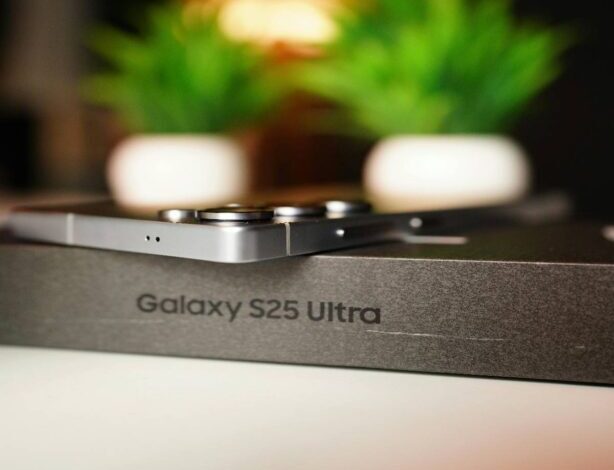
If you’re here for samsung galaxy s25 specs, you probably want two things at once: the clean, factual checklist (screen, battery, cameras, chip), and a bit of help interpreting what any of that means day to day. I get it. Specs are oddly slippery now. Two phones can share the same processor and still feel different because of thermals, software tuning, or just the size and weight in your hand.
So this guide does both. It lays out the Galaxy S25, S25+, and S25 Ultra specs in a way you can actually scan, then it slows down and explains the parts that tend to matter most: display feel, charging reality, camera hardware (and its limits), and the practical differences between models.
Quick note before we begin: some details vary a little by region and storage tier. If something looks “off” compared to what your carrier lists, it’s usually a variant issue, not you misreading it.
Samsung Galaxy S25 lineup at a glance
Samsung’s S25 family is basically three personalities sharing the same core DNA: compact flagship (S25), “big but still sensible” (S25+), and the everything-phone (S25 Ultra). Across the lineup you’ll commonly see the Snapdragon 8 Elite platform paired with 12GB RAM, plus modern AMOLED displays with 120Hz refresh.
- Galaxy S25: 6.2-inch FHD+ (2340×1080) 120Hz display, 4,000mAh battery, 25W wired charging, 15W wireless.
- Galaxy S25+: 6.7-inch QHD+ (3120×1440) 120Hz display, 4,900mAh battery, 45W wired charging, 15W wireless.
- Galaxy S25 Ultra: 6.9-inch QHD+ (3120×1440) 120Hz display, 5,000mAh battery, typically 45W wired charging, 15W wireless, and the most advanced camera hardware.
Sources: GSMArena for S25 and S25+ core spec sets, plus Back Market and TechRadar for cross-checking and model-to-model comparison coverage.
Also, if you already know you’re deciding between models, there’s a dedicated buying guide here: S25 vs S25+ vs Ultra (practical comparison).
It’s shorter, more opinionated, and it might save you time.
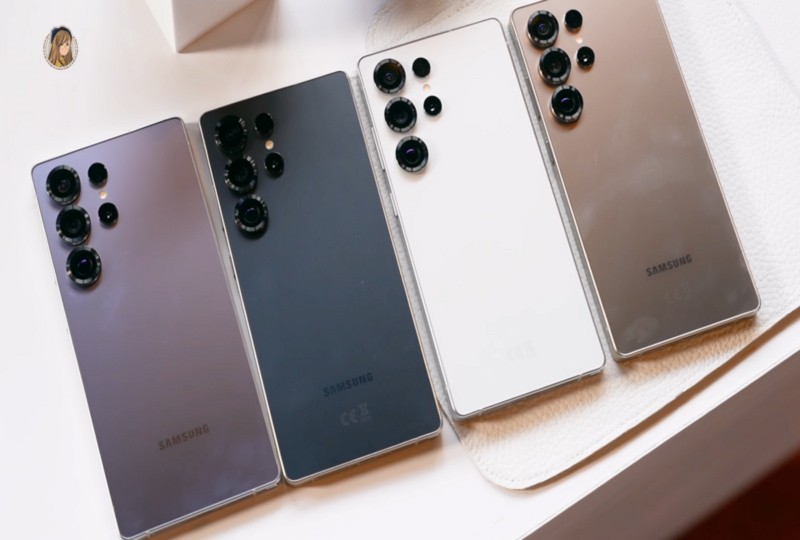
Samsung galaxy s25 specs (verified)
This section is intentionally straightforward. It’s the “what it is” part. Then we’ll do the “what it feels like” part.
Samsung galaxy s25 specs: display, chip, memory
Display: The Galaxy S25 uses a 6.2-inch Dynamic AMOLED 2X display with a 2340×1080 (FHD+) resolution and a 120Hz refresh rate. The S25+ steps up to 6.7 inches and a 3120×1440 (QHD+) resolution, also with 120Hz. The Ultra goes larger again at about 6.9 inches with QHD+ and 120Hz.
Processor: The Galaxy S25 and S25+ are widely listed with Qualcomm’s Snapdragon 8 Elite (SM8750-AB) platform. In plain terms: high-end performance, fast AI workloads, and enough headroom for heavy camera processing without making everything feel sluggish.
RAM and storage: A common configuration across the lineup is 12GB RAM. Storage options vary, but you’ll typically see 256GB and 512GB widely available, with the Ultra often extending to 1TB in some markets.
If you’re the kind of person who keeps a phone for four or five years, storage is the quiet spec you’ll feel most. Not on day one. On day 900, when your photo library and offline downloads get a little… ambitious.
Battery and charging specs
Battery capacity: The Galaxy S25 is commonly listed with a 4,000mAh battery, the S25+ with 4,900mAh, and the S25 Ultra with 5,000mAh.
Charging: The base S25 is frequently listed at 25W wired charging and 15W wireless charging. The S25+ usually supports faster 45W wired charging (with 15W wireless). Ultra models are also commonly listed with 45W wired charging and 15W wireless charging.
There’s a deeper breakdown here if charging is a deciding factor: Samsung Galaxy S25 battery and charging specs.
It covers the practical side (what “45W” tends to mean, and what it doesn’t).
Camera specs (rear and selfie)
Here’s the thing about camera specs: they’re necessary, but they rarely tell the whole story. Still, hardware sets the boundaries.
- Galaxy S25: Typically listed with a 50MP main camera, 12MP ultrawide, and 10MP telephoto (3x optical), plus a 12MP front camera.
- Galaxy S25+: Often similar core camera hardware to the base model (model-specific tuning can still differ).
- Galaxy S25 Ultra: Generally positioned with a 200MP main camera and an expanded telephoto/ultrawide setup compared to the non-Ultra models.
If you want the camera section in “real words” (who benefits from which lens, what to expect from telephoto, what low-light claims usually hide), use this :Samsung Galaxy S25 camera specs (what matters).
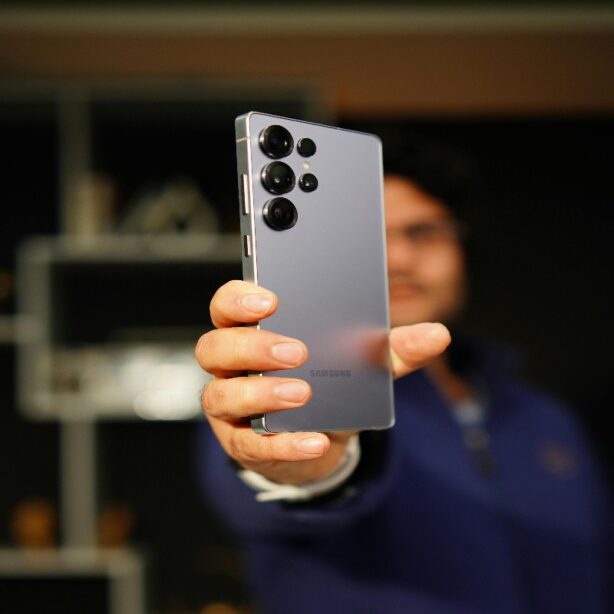
What these Galaxy S25 specs mean (in real life)
This is the part that usually gets skipped. Not because it’s hard, exactly, but because it requires taking a stance. And specs writers often avoid that.
Display: the spec that changes the whole phone
The S25’s 6.2-inch FHD+ display is the “pocket-friendly” choice. It’s easier to use one-handed, and it usually makes the phone feel quicker simply because your thumb travel is shorter and the device is lighter. That sounds almost silly, but it’s real.
The S25+ and Ultra run QHD+ resolution. In theory, that means sharper text and a more “printed” look in certain apps. In practice, many people notice the size before the resolution. The bigger screen changes how you watch video, how you edit photos, how you read, and how much you tolerate typing long emails on a phone.
All three typically run up to 120Hz refresh rate. If you’ve used 120Hz for a while, going back to 60Hz can feel like wading through water. But also—this is one of those mild contradictions—120Hz isn’t always worth sacrificing battery for everyone. If you’re a “charge once, forget it” type, you may prefer smoother scrolling. If you’re traveling, battery might win.
Performance: Snapdragon 8 Elite and the “invisible” specs
On paper, sharing the Snapdragon 8 Elite across the lineup simplifies buying decisions. It means you’re not paying extra just to avoid a slow phone. Good.
But real performance is also cooling, sustained clocks, and how aggressive the software is with background activity. A larger phone can sometimes hold performance longer because there’s more room for thermal design. It’s not a guarantee, but it’s why benchmarks don’t always match “feel.”
Practically: if your workload is mostly messaging, browsing, photos, and maps, the base S25 should already feel premium. If you do heavy video capture, long gaming sessions, or you’re always tethering and multitasking, the bigger models may stay cooler more often.
Battery and charging: why wattage is only half the story
Yes, the S25’s 25W wired charging looks conservative next to the 45W often listed for the S25+ and Ultra. It’s a fair criticism.
But charging speed depends on the charging curve, heat, and your habits. If you charge overnight, 25W vs 45W can be a non-issue. If you rely on short top-ups during a busy day, that’s when faster charging feels like a real feature instead of a marketing line.
Battery size matters too. Going from 4,000mAh (S25) to 4,900mAh (S25+) is not subtle. It’s the kind of difference that can turn “I hope it lasts” into “I stopped checking.” The Ultra’s 5,000mAh is bigger still, and the larger body can sometimes help with efficiency and thermals, but the big screen can also eat some of that advantage. It’s a tug-of-war.
Cameras: the moment you’ll notice the Ultra
The base S25’s triple camera setup (main + ultrawide + 3x telephoto) is a very capable, balanced kit on paper. For a lot of people, 3x is the sweet spot for portraits and street shots.
The Ultra is where Samsung typically leans into “do everything” photography—higher-resolution main camera, stronger zoom options, and a more ambitious ultrawide. That tends to matter most if you frequently shoot moving subjects, indoor events, stage performances, or travel photos where you can’t physically get closer.
If you mostly take photos of people up close, food, pets, and day-to-day life, the non-Ultra models can be more than enough. The Ultra is fantastic, but it can also be overkill. And yes, sometimes it’s fun to buy overkill. No judgment.

Galaxy S25 vs S25+ vs S25 Ultra: which should you buy?
This section is opinionated on purpose. It’s also not perfectly neat, because buying a phone isn’t perfectly neat.
Choose the Galaxy S25 if you want the “normal” flagship
- You prefer a compact 6.2-inch device that’s easier to handle.
- You want flagship performance and cameras without carrying a bigger phone.
- You don’t mind 25W wired charging, or you mostly charge overnight.
Choose the Galaxy S25+ if you want the best balance
- You want a larger 6.7-inch QHD+ display without going all the way to Ultra size.
- You care about faster wired charging (often listed at 45W) and a noticeably larger battery (4,900mAh).
- You like the idea of the Ultra, but you’re not sure you’ll use the extra camera features enough to justify it.
Choose the Galaxy S25 Ultra if you know you’ll use it
- You want the largest display (around 6.9-inch QHD+) and the biggest “do everything” feel.
- You prioritize the most advanced camera hardware in the lineup.
- You’re okay with a bigger phone in exchange for a more no-compromises spec sheet.
Still unsure? This is exactly what the comparison cluster post is for:
Samsung Galaxy S25 vs S25+ vs Ultra.
It’s a little more direct about who should skip which model.
Full specs checklist (the stuff you’ll search later)
This is the “bookmark it” section. It’s not glamorous, but it’s the part people come back to—especially when they’re checking carrier compatibility, accessories, or whether a feature actually exists.
Connectivity and modern basics
- Cellular: 5G support is standard across the lineup in most listings.
- SIM: many market versions support physical SIM plus eSIM (variant-dependent).
- Wi‑Fi/Bluetooth: modern flagship standards (exact versions can vary by model/region listing).
- USB-C: standard, with USB specs varying by model and region.
Build, durability, and feel
- Expect premium glass-and-metal construction across S25 and S25+, with Ultra variants often listed with a titanium frame in some comparisons.
- Water and dust resistance is typically listed at flagship-grade ratings (always confirm the exact rating for your region before buying).
If you’re the “I need every last band and sensor listed” type, you’ll usually want to cross-check a database-style spec source (like DeviceSpecifications) with a retailer or manufacturer page. It sounds excessive. Then again, nobody regrets confirming compatibility before spending flagship money.
FAQ: quick answers people actually ask
Does the Galaxy S25 have 25W or 45W charging?
The base Galaxy S25 is commonly listed with 25W wired charging, while the S25+ is commonly listed with 45W wired charging. Ultra models are also commonly listed at 45W wired charging.
Is the Galaxy S25 display 120Hz?
Yes, the Galaxy S25 is commonly listed with a 120Hz display, and the S25+ and Ultra are also commonly listed with 120Hz.
Is the Snapdragon 8 Elite in all S25 models?
Many widely cited spec listings show Snapdragon 8 Elite across the S25 lineup, though regional variants can exist. If you’re buying through a carrier, double-check the exact model number on the listing.
What’s the simplest way to choose between S25 and S25+?
If you want compact and “good enough for everything,” pick S25. If you want a bigger screen, a bigger battery, and faster wired charging, S25+ tends to feel like the upgrade you notice daily.
Final thoughts
Reading samsung galaxy s25 specs can feel like doing homework, and it shouldn’t. The honest takeaway is that the base S25 already covers the flagship essentials: fast chip, smooth 120Hz display, and a versatile camera set. The S25+ is the “comfort upgrade” (bigger screen, bigger battery, faster charging), and the Ultra is the one to buy when you actually want the most camera and display Samsung offers—and you’re fine carrying it around.
And if you’re still hovering between two models, it’s okay. People don’t buy phones purely with logic. They buy them with a mix of budget, habit, and a small desire to feel excited when they pick it up.