Samsung Galaxy A56 camera review
If you landed here looking for a practical Samsung Galaxy A56 camera review, you’re probably not chasing lab charts. You want to know whether this phone takes good photos of people, food, pets, streets at night, and the random everyday moments that never happen under perfect lighting. That’s fair. Camera specs can sound impressive, but real life is where phones either earn their keep or quietly disappoint you.
The short version, before we get into it: the Galaxy A56 has a reliable main camera, a useful ultrawide, a mostly forgettable macro lens, and selfie/video performance that may actually matter more to many buyers than the macro camera ever will. It’s a camera system with strengths, clearly. But it also has limits, especially once you push zoom or move into weaker light.
If you want the broader buying picture beyond photography, you can start with our full samsung galaxy a56 5g reviews guide, which looks at display, battery life, performance, and long-term value as well.
Who this camera setup is really for
The Galaxy A56 camera system suits people who want consistently pleasing photos without having to think too much. That includes casual users, parents, travelers, students, and really anyone who just wants to pull out a phone, press the shutter, and get something decent most of the time.
It is less ideal for buyers who care deeply about zoom photography or who expect every lens on the back to be equally strong. They won’t be. That’s normal in this category, but it’s still worth saying plainly.
Samsung’s camera style tends to prioritize photos that look ready to share right away. Sometimes that’s exactly what people want. Sometimes it can feel a little processed. I think both reactions are valid, depending on taste.
Camera specs, but only the useful part
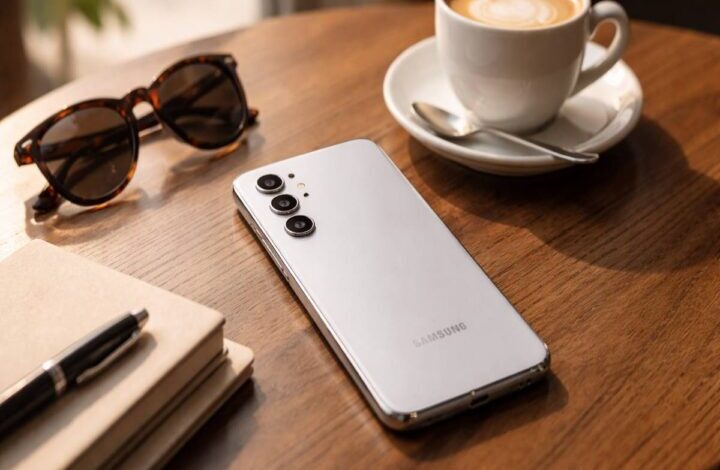
On paper, the Galaxy A56 gives you a 50MP main camera with OIS, a 12MP ultrawide, and a 5MP macro lens. Up front, there’s a 12MP selfie camera, and video recording goes up to 4K at 30fps.
That sounds fairly typical for an upper mid-range Samsung, and in some ways it is. The important thing is not just the numbers, though. It’s how the cameras behave. The 50MP main camera is the lens you’ll depend on. The ultrawide is handy and sometimes surprisingly good in daylight. The macro camera feels like the familiar “included because the spec sheet wanted a third lens” addition.
There is no dedicated telephoto camera here, and that matters more than brands like to admit. If you often photograph concerts, kids at a distance, travel details on buildings, or anything where you can’t physically move closer, this absence will shape your experience.
Daylight photos from the main camera
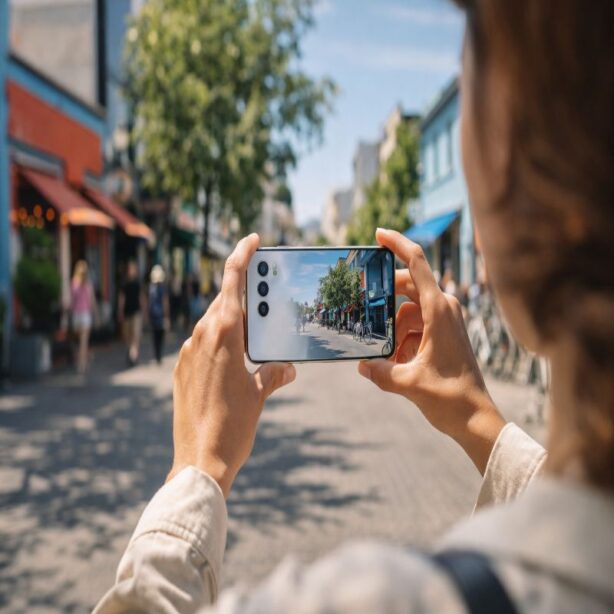
This is the part of the camera system that works best, and thankfully it’s also the one people use most. In good daylight, the Galaxy A56’s main camera captures detailed, colorful images with pleasing contrast and a generally attractive look. It tends to produce photos that feel lively without becoming totally unrealistic.
Samsung usually leans a little toward punchier color, and the A56 follows that habit. Blues can look rich, greens can pop a bit, and skin tones often look flattering rather than hyper-neutral. For many people, that’s not a flaw. It’s the reason they like Samsung photos in the first place.
Sharpness is generally strong from the main camera, especially in the center of the frame. Dynamic range is also good enough that outdoor scenes with bright skies and darker foregrounds don’t immediately fall apart. You can usually trust the phone to get a solid result without much effort.
That said, “solid” is the key word. The A56 doesn’t consistently produce the kind of image quality that makes you stop and think, wow, this looks expensive. It’s good. Reliable. Sometimes very nice. But not truly special in the way the best camera phones in the category can be.
People, skin tones, and photos that feel usable
For a lot of buyers, camera quality really means one thing: how people look. The Galaxy A56 generally does well here. Faces are exposed nicely, skin tones usually look pleasant, and the camera tends to produce social-media-friendly results without much editing.
I think that matters more than macro photography, honestly. If your phone makes friends and family look good in daylight and indoor lighting, you’ll probably describe it as having a “good camera” even if the technical story is more mixed.
Samsung processing can sometimes smooth or brighten in a way that feels slightly artificial, particularly if you compare it side by side with more neutral-looking phones. But on its own, the output is often easy to like. And maybe that’s enough.
Portrait mode: mostly convincing, sometimes a bit too eager
Portrait mode on the Galaxy A56 is pretty capable in good lighting. Edge detection is usually decent around faces and hair, and background blur looks natural enough for casual use. It won’t fool a camera nerd every time, but it often looks convincing at phone-screen size.
The trick with portrait mode is that it can look excellent right until it doesn’t. Loose hair, glasses, busy backgrounds, and low light still make smartphone portrait modes stumble. The A56 is no exception. It gets a lot right, then suddenly cuts out part of a shoulder or softens something it shouldn’t.
Still, for portraits of people in everyday conditions, it’s more than usable. I wouldn’t buy the phone for portrait mode alone, but I also wouldn’t worry about it.
Ultrawide camera: useful, sometimes surprisingly nice
The 12MP ultrawide is there for landscapes, architecture, group photos, and all those moments where the main camera just can’t fit enough in. In bright light, it can deliver pretty enjoyable shots with good color and enough detail to be genuinely useful rather than a token extra lens.
That’s important, because many mid-range phones include weak ultrawides that feel like an obligation. The A56’s ultrawide is better than that. Not elite, not magical, but very workable when conditions are good.
You may notice softer detail toward the edges, which is common. And when you compare it directly to the main camera, you’ll obviously see the difference. But if you mostly use it for scenery or wider social photos in daylight, it can hold up better than expected.
Where things get shakier is indoor light and night scenes. The ultrawide loses confidence fast there. Detail drops, noise becomes more obvious, and the output can look softer than you’d probably like.
Low-light photos: the main camera can cope, the ultrawide struggles
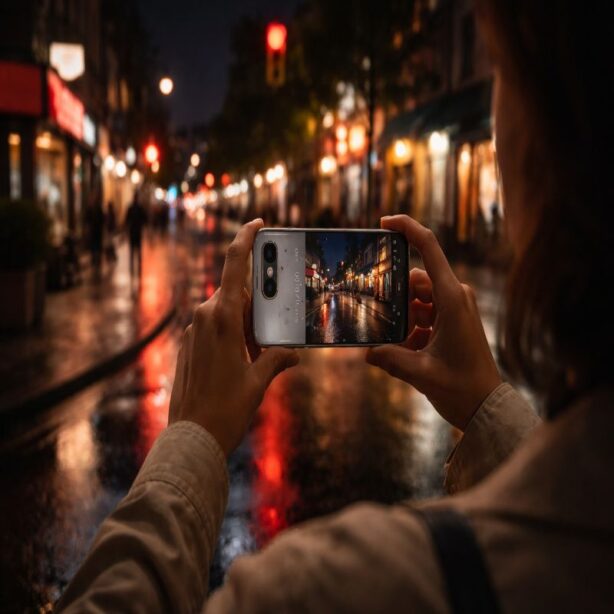
Low light is where many phone cameras reveal what they really are. On the Galaxy A56, the main camera remains reasonably dependable after sunset. It can preserve a decent amount of detail, and highlights and shadows are often balanced well enough that night shots still feel usable.
There’s a limit, though. Bright signs and light sources may clip, darker areas can smear a little, and if the scene is really challenging, you’ll notice the phone leaning on processing to hold things together. It’s not disastrous. It’s just not especially elegant.
The ultrawide camera is weaker here. Night ultrawide photos tend to lose sharpness and confidence much more quickly, so if you care about low-light photography, you’ll want to rely on the main camera whenever possible. The ultrawide is best treated as a daylight tool first and a low-light option only if you truly need the wider frame.
This is one of those places where expectations matter. If your benchmark is “looks decent on my phone,” the A56 will often satisfy you. If your benchmark is “I like zooming into my photos later and inspecting details,” you’ll be less impressed.
Zoom: acceptable at 2x, shaky beyond that
There’s no telephoto lens on the Galaxy A56, so zoom depends on digital cropping from the main sensor. In bright conditions, 2x shots can still look fairly usable. Not perfect, but usable. If you’re posting casually or viewing photos on a phone screen, you may not mind much.
Past that, things become less convincing. Fine detail drops, textures get mushier, and images can start looking more processed than photographed. At night, even 2x can lose a lot of clarity, which means zoom is one of the easier ways to run into the A56’s limits.
This doesn’t mean the phone is bad. It just means you need to know what kind of photographer you are. If you rarely zoom, this won’t matter much. If you zoom all the time, it absolutely will.
Macro camera: technically present, emotionally optional
The 5MP macro lens is the least compelling part of the setup. You can have fun with it, sure, especially if you like photographing flowers, textures, or tiny objects just because it’s satisfying. But the results don’t consistently feel essential.
Macro cameras on phones often sound more exciting than they are, and the A56 doesn’t really change that story. Detail can be okay under good light, but the lens is not a reason to buy the phone. If anything, it’s more of a bonus for curious users than a feature serious buyers should prioritize.
Honestly, many people will get more satisfying close-up images by just using the main camera carefully. That’s not the official marketing answer. But I think it’s the practical one.
Selfie camera: better than the megapixels suggest
The front camera is 12MP, which on paper may look less impressive than older higher-megapixel selfie cameras Samsung has used. But megapixels don’t tell the whole story, and the A56’s selfie performance is often more competent than a quick glance at the number would suggest.
In good light, selfies are detailed, pleasant, and generally flattering without looking overly harsh. Portrait selfies also tend to work well enough for everyday use, especially if you care more about looking good than analyzing every edge cutout at full size.
There’s no autofocus on the selfie camera, so there are limits. You’ll get the best results when holding the phone at a fairly normal distance. Still, for video calls, casual social clips, and everyday front-camera use, this part of the A56 package is stronger than some buyers might expect.
Video quality: one of the A56’s quieter strengths
Video is where the Galaxy A56 becomes more interesting. The main camera can record 4K at 30fps, and video quality is generally strong for the class. Daylight footage looks detailed and colorful, and stabilization is good enough that casual walking shots come out more polished than you might expect from a mid-range phone.
That matters because a lot of people now care as much about video as photos, maybe more. If you record short clips of family, street scenes, pets being chaotic, or quick travel moments, the A56 is fairly reassuring.
Night video from the main camera is also better than many buyers would assume. It isn’t miracle-level good, but it often remains sharp enough and controlled enough to be genuinely useful. Light sources can still get a little intense, and exposure can drift in tricky scenes, but the overall result is respectable.
The ultrawide camera also performs decently for video in good light, which is nice because some competing phones throw in weak secondary cameras that become almost useless once you switch away from the main lens. The A56’s ultrawide video isn’t perfect, but it’s good enough that you won’t avoid using it.
How the A56 compares to what buyers usually expect
Most people shopping for this phone are not comparing it with dedicated cameras. They’re comparing it with older Samsung A-series devices, maybe a Pixel A-series option, perhaps a Nothing phone, or whatever else is around the same price. In that context, the A56 camera system feels competent and safe, if not especially adventurous.
If you’re upgrading from an older mid-range Samsung, you’ll likely find the camera system dependable and familiar. If you’re moving from a phone with a weak main sensor, the A56 may feel like a clear upgrade. If you’re coming from a phone with a dedicated telephoto camera, you may miss that flexibility immediately.
That’s also why camera evaluation gets messy. For one buyer, the A56 camera is “really good.” For another, it’s “good except zoom.” Both people are probably being honest.
Real-life camera scenarios
Kids, pets, and moving subjects
The main camera can do a decent job here, particularly in good light. Colors are lively, shutter performance is generally quick enough, and the results often look pleasant right away. But as always with phones in this class, movement plus low light is where misses become more likely.
Indoor dinners and evening hangouts
The main camera usually gives you usable shots with decent mood and okay detail. Sometimes that’s enough. Sometimes you’ll wish for cleaner shadows and more natural highlights. The ultrawide is less dependable in this setting, so it helps to keep expectations grounded.
Travel and street photography
This is actually a pretty comfortable use case for the A56. The main camera is dependable, the ultrawide is genuinely handy for buildings and wider scenes, and the overall output is colorful enough to feel satisfying without much editing. If your travel style is casual and phone-first, the A56 is easy to live with.
Food and close-ups
The main camera is usually the better choice here, not the macro. You’ll often get richer detail, better contrast, and more reliable results just by composing carefully with the main lens instead of forcing the macro into situations where it doesn’t shine.
Should A55 owners upgrade for the camera?
This is the awkward question, because the answer is not dramatically exciting. If your A55 still takes photos you mostly like, the A56 is probably not a must-upgrade camera jump on its own. It feels more like a refinement than a reinvention.
If, however, you care about the complete package—longer software support, better charging, fresher hardware, and a camera system that remains reliably good in the ways mosta people actually use it—then the A56 starts to make more sense. For the full upgrade decision, it’s worth reading Galaxy A55 vs A56: should you upgrade? because camera quality is only one piece of that argument.
What the Galaxy A56 camera gets right
- The main camera is reliable in daylight and generally pleasant in color and contrast.
- Selfie quality is better than some people will expect from the 12MP spec alone.
- Video recording is one of the stronger parts of the package, especially from the main camera.
- The ultrawide is useful and fairly enjoyable in good light.
- Samsung’s processing often delivers photos that look ready to share right away.
Where the camera still falls short
- No dedicated telephoto camera means zoom quality is limited.
- The ultrawide drops off noticeably in weaker lighting.
- The macro lens feels more decorative than essential.
- Low-light photography is good enough, but not standout.
- Buyers hoping for a huge leap over the previous generation may find the improvements a bit modest.
Verdict
The Samsung Galaxy A56 camera review in plain English goes like this: the phone is good at the camera tasks most people care about most of the time. Its main camera is dependable, its selfies are solid, and its video performance is quietly one of its best qualities. That combination alone will be enough for a lot of buyers.
But it’s not a camera phone for people who want range, flexibility, or standout low-light performance across every lens. The missing telephoto camera matters. The macro lens doesn’t add much. And the ultrawide, while useful, is clearly a secondary player once the light gets difficult.
So, is the Galaxy A56 a good camera phone? Yes, in a practical, everyday sense. Is it the most exciting camera phone in its segment? Not really. And maybe that’s fine. Some phones are trying to impress you in five minutes. This one feels more interested in being dependable for two or three years, which is not glamorous, but honestly, that has its own appeal.
If you’re still deciding whether the camera is enough in the context of the whole phone, go back to the full samsung galaxy a56 5g reviews guide, and if battery life matters just as much as camera quality, the companion piece on Samsung Galaxy A56 battery life is worth a look too.