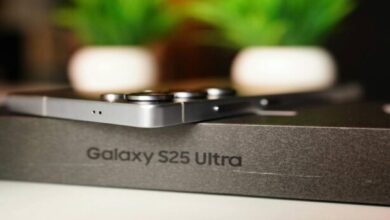
IPhone 17 Pro Max review: What’s Actually New
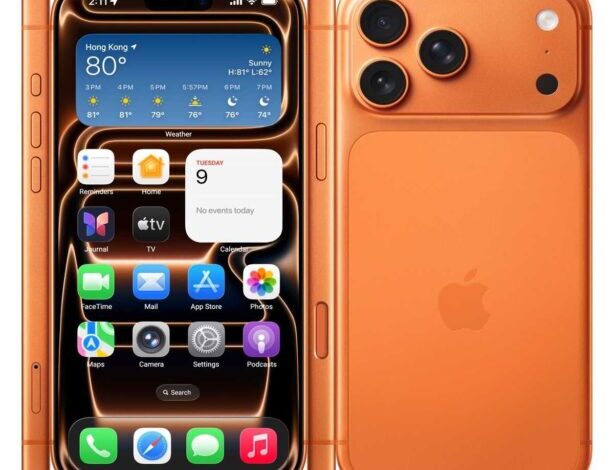
Here’s the honest setup: this iphone 17 pro max review is written for people who don’t buy phones for sport.
You want a device that feels good day-to-day, shoots reliably when the moment is real (not staged), and doesn’t melt in your hand the first time you push it.
And, yes, you probably also want to know whether this is a meaningful upgrade or just another expensive lap around the block.
The iPhone 17 Pro Max is that familiar contradiction Apple does so well: it feels like a big change and a small change at the same time.
The redesign is noticeable, the camera system is more flexible in a way you’ll actually use, and the battery life is excellent.
But it’s still huge, still pricey, and it’s not automatically the best pick if you don’t genuinely want the “Max” lifestyle.
iPhone 17 Pro Max review: the quick verdict
If you’re coming from an iPhone 14 Pro (or older), this feels like a real jump in camera versatility and overall polish.
If you’re on a 15 Pro / 16 Pro generation, it gets more complicated—because the upgrade is less about “better” and more about whether you care about the specific things Apple changed this year (especially zoom behavior, the selfie camera approach, and thermals).
Engadget even frames the Pro and Pro Max as functionally identical beyond screen size, battery capacity, and price, which is basically true in practice.
- Buy the 17 Pro Max if you want the best iPhone battery endurance and you regularly use zoom for people, details, travel, or casual wildlife.
- Skip it if you hate big phones or you already own a recent Pro and mostly shoot 1× in good light.
- Wait if camera app reliability issues make you anxious; iOS 26 has been described as a rough start by some camera-focused reviewers.
One small, personal reaction (and I’m a little annoyed at myself for it): the bigger screen really is easier on the eyes for editing photos, reading, and long messages. I still don’t love carrying it around. Both things can be true.
Who this phone is really for
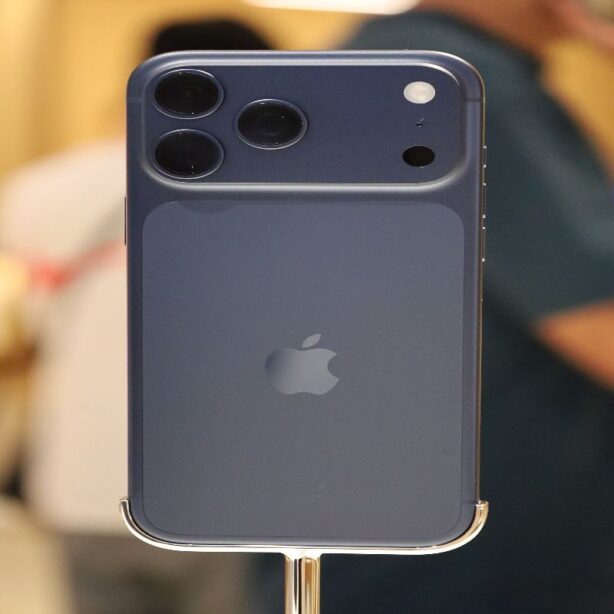
Think of the iPhone 17 Pro Max as the “reliable workhorse” iPhone: the one you pick when you care about not missing the shot, not stressing about battery percentage, and not dealing with heat issues as often. That’s also the basic story coming out of mainstream reviews: the redesign, thermal approach (vapor chamber), and camera versatility are the headline items.
It’s a strong fit for:
- Parents who shoot indoors a lot (and want fewer blurry misses).
- Travelers who want reach (4× and “8×” framing) without carrying a second camera.
- Creators who record plenty of video and don’t want the phone getting uncomfortably hot.
- Anyone who’s simply tired of charging anxiety and wants the biggest battery Apple sells.
It’s a weaker fit for:
- Anyone who truly prefers one-handed use for everything.
- People who mostly use 1× and rarely zoom past 2×.
- Buyers who are tempted by a thinner “status” phone (the iPhone Air) but don’t actually need Pro cameras.
Design and comfort (the part you feel every day)
The iPhone 17 Pro line is a redesign that’s meant to be felt, not just noticed in a spec list.Engadget describes an aluminum unibody feel that’s new-but-familiar, and also ties it directly to thermal management and battery goals. In real life, the biggest difference is that the phone feels sturdier and more “tool-like” than the jewel-like glass slabs of the recent past.
Still… it’s a 6.9-inch phone. That’s a commitment. There are days when that screen is a joy, and days when it’s just a lot.If you’ve ever taken a long walk and felt the phone tug at a pocket or bag strap, you know what I mean.
One detail that keeps coming up in more lived-in takes: the camera control button can be both convenient and awkward. Lowyat’s review notes the placement can feel off for shutter use, which lines up with what many people experience with new physical controls: it takes time to build muscle memory, and some hand positions just don’t agree with it.
If you’re planning to write the “most helpful” iPhone 17 Pro Max review on the internet, this is worth doing:
describe how you actually hold the phone when taking photos in portrait and landscape, and how the camera button changes that. People don’t search for “ergonomic truth,” but they feel it in their wrist after day three.
Display and speakers (quiet wins)
The display is one of those things you stop noticing because it’s consistently good. Engadget notes the ProMotion experience continues to make scrolling feel effortless, and that Apple improved anti-reflection treatment (even if the change is subtle). In plain terms: it’s a flagship display. The question is whether you want it at 6.9 inches.
For long reading sessions, that size makes your brain relax a bit.But, again, it also makes the phone harder to live with in tight pockets or one-handed situations.That mild contradiction is basically the Pro Max experience.
Performance and thermals (vapor chamber: does it matter?)
Apple’s big behind-the-scenes story this year is heat: a vapor chamber design paired with the new chassis.
Engadget spent time trying to push the iPhone 17 Pro line into uncomfortable temperatures and found it generally stayed cool during typical use, with warmth collecting around the camera “plateau” area under sustained load.
Here’s what that means in human language: the phone is less likely to feel like it’s turning into a hand warmer during long sessions, but it can still get hot when you do genuinely demanding stuff. And that makes sense. You’re holding a small computer.
If you want to add authority (and truly outperform thinner reviews), run a repeatable test and report it plainly:
- Record 4K video continuously for 10 minutes in a warm room, then note surface warmth and any warnings.
- Play a single demanding game or run a sustained benchmark for 20–30 minutes and note comfort.
- Do a “creator stress” loop: shoot photos, then edit, then export, then repeat—because that’s how heat really builds up.
Engadget also notes AI-related tasks like Image Playground / Genmoji creation can heat the phone, even if it takes longer to get there than older models. That’s important context if you’re going to talk about performance honestly: it’s not just games anymore.
Battery life (what to expect in real routines)
Battery life is still one of the main reasons to buy the Pro Max, and even the mainstream reviews treat it as the endurance champ. At the same time, Engadget makes a useful point: “close to two days” can be real, but it isn’t guaranteed, and usage patterns matte (especially when a reviewer ends up using the smaller phone more often).
The most helpful way to write about battery isn’t a single number—it’s a few recognizable days:
- The messaging day: mostly chats, browsing, email, camera used casually.
- The camera day: lots of shooting, zooming, short video clips, edits.
- The travel day: maps, photos, high brightness, cellular use, some hotspot time.
If you want to go deeper (and you should), build a dedicated battery cluster post and link it right where the reader is already thinking about it: see the real-world scenarios in iPhone 17 Pro Max review battery life tests.
Cameras: what changed, what didn’t
The camera story is the reason many people upgrade, and it’s also where most reviews either get too technical or too vague. Lux’s camera-focused write-up is blunt about what’s new: the telephoto sensor is now 48 megapixels and notably larger (they cite 56% larger), Apple leans hard on its center-crop imaging pipeline for “8×” output, and the system is more consistent across lenses than many competing phones.
Engadget approaches it from the everyday side: the camera app now presents 0.5×, 1×, 2×, 4×, and 8× shortcuts,
and the general look is still “iPhone”—warmer and more saturated than Google’s Pixel style, with very strong shadow detail in high dynamic range scenes. Put those together and you get the practical truth: this is a versatile system that behaves more predictably than people expect from tiny sensors.
Now, a gentle warning that’s worth saying out loud: the main camera hardware isn’t entirely new. Lux points out the main sensor is essentially the same as prior generations, and the ultra-wide is also familiar hardware with processing tweaks. So the “wow” factor is less about the 1× shot and more about what happens when you start moving through focal lengths.
iPhone 17 Pro Max review: 0.5×, 1×, 2×, 4×, 8×—how to actually use them
Here’s a rule of thumb that sounds almost too simple, but it works:
use the presets, not the in-between zoom slider, unless you have a specific reason.
Both Engadget and Lux emphasize that Apple is doing dedicated processing work for these “virtual lenses,” especially at 2× and 8×.
- 0.5×: Architecture, tight spaces, dramatic foreground. Watch for edge distortion if people are near the sides.
- 1×: The default for a reason. Fast, sharp, reliable.
- 2×: Quietly one of the biggest practical improvements. Lux says 2× looks noticeably better thanks to improved processing for crop shots.
- 4×: The new “sweet spot” telephoto. Lux calls it an elegant choice for portraits and details, with strong stabilization and natural rendering.
- 8×: The fun button. It’s also the one most likely to disappoint at night if you don’t treat it carefully.
If you want a deeper, scenario-based guide—concerts, kids indoors, travel landmarks, moving subjects—link out naturally to a dedicated zoom breakdown: 4× vs 8× zoom on iPhone 17 Pro Max.

4× vs 8× zoom (the part everyone argues about)
Lux’s take is surprisingly clear: the 8× option is a center-crop of the telephoto sensor paired with heavy stabilization and processing, and the experience of handheld framing at that “200mm-ish” reach is far better than it has any right to be on a phone. They also describe the viewfinder sometimes warping or lagging a little, which is basically the stabilization system fighting physics in real time.
Engadget’s real-world conclusion is similar, just less poetic: 8× shots can look clean with low noise and good exposure, while anything far beyond that starts to fall apart (which is true of basically every phone). So, yes, 8× can be legitimately useful. But it’s not magic.
One thing worth adding (because readers appreciate honesty more than hype): 8× is not the mode for frantic moving subjects. Lux even notes it can be challenging to capture rapid motion at that reach, even with the stabilization. That doesn’t make it bad—it just makes it a tool you learn.
Portraits and Photographic Styles
Engadget reports meaningful portrait improvements, especially at 2×, including better separation around hair and fur, and they praise Apple’s Photographic Styles as a depth-aware “filter” approach that can look more natural than simple Instagram-style presets.In practice, this is one of those changes you feel when you take people photos every week: fewer weird edges, fewer “why does my hair look melted?” moments.
It’s still not perfect (nothing is), and some people will always prefer Google’s look. But the gap is smaller than it used to be, and that’s a big deal if you live in Portrait mode.
Selfies: Center Stage is more useful than it sounds
Center Stage on the front camera is one of those features that sounds like a gimmick until you use it in a normal social moment.Lux explains Apple moved to a larger square sensor and uses it to output 18MP selfies while reframing automatically,and Engadget calls the system a genuinely clever update that helps when you rotate the phone or try to fit more people in.The “human” way to describe this is: it saves you from awkward arm gymnastics.Not every time. But often enough that you’ll miss it when it’s gone.
Video: the Pro stuff most people still benefit from
Lux goes deep into pro video territory—Log workflows, ProRes RAW, and more—while still making the point that these features matter because developers can build around them. Engadget, meanwhile, shows the everyday side: dual-camera video exists, but it’s niche, and you’ll probably use it only when you want “proof I was there” footage.
For most owners, the practical benefits are simpler:
- Better stability across more zoom ranges.
- More confidence that the phone won’t overheat as quickly during longer shoots.
- A more consistent look between lenses when you’re moving quickly between shots.
Software and reliability (a quick reality check)
iOS 26 is a big visual shift, and reviewers have mixed feelings about the refresh.
The more important point for a camera buyer is reliability: Lux describes iOS 26 as a rough start,
citing issues like camera freezes, distorted images, and photos taking a long time to appear.
This is exactly the kind of thing that belongs in a “helpful” review, because it affects trust.It’s also why it’s worth building a troubleshooting cluster that can rank for high-intent searches like “camera freezing” and “photos not showing up”: iPhone 17 Pro Max camera issues and fixes.
A cautious note: software issues can be real without being universal. If your review includes a section like “what I’d try before panicking,” readers tend to stick around—and they tend to trust you more.
iPhone 17 Pro Max vs iPhone 17 Pro vs iPhone Air
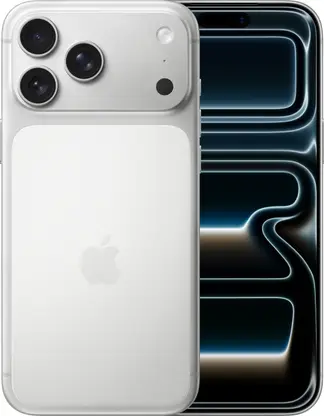
Engadget argues the Pro and Pro Max are essentially the same phone aside from screen size, battery capacity, and price, and that the choice often comes down to whether you want the bigger display and endurance. That framing is helpful because it lowers the noise: you’re not choosing between “good camera” and “bad camera” here.
The more interesting tension is the iPhone Air Engadget calls it a kind of status-symbol thin phone, while also admitting the Pro is the more reliable choice if you care about a versatile multi-camera setup. If you love ultrawide and telephoto flexibility, it’s hard to argue against the Pro models.
And then there’s the regular iPhone 17. Engadget points out it’s closer to “Pro” than you might expect this year, with a strong overall package for less money. That doesn’t make the Pro Max a bad buy—it just means you should be honest about why you’re paying extra.
Buying advice (the part people actually need)
Here’s the cleanest way to decide, without pretending it’s purely rational.
- You should buy the 17 Pro Max if you want the best iPhone battery life and you actually use zoom for real moments (travel, kids, pets, stage events).
- You should buy the 17 Pro if you want the same camera and performance story but you don’t want a phone that takes over your pocket.
- You should consider the Air if thinness and feel are your top priorities and you don’t rely on multi-camera flexibility.
- You should consider the regular 17 if you want a modern iPhone experience for less and don’t need the Pro extras.
Also, a small piece of boring truth that matters: if you keep phones for 3–5 years, buying “too much phone” can make sense. If you swap yearly, it’s easier to get trapped paying for marginal improvements that don’t change your life. That might sound obvious, but it’s the difference between a satisfying purchase and a slightly guilty one.
Conclusion
Writing an iphone 17 pro max review that’s genuinely useful means admitting the phone is both impressive and imperfect. The iPhone 17 Pro Max feels like Apple leaning back into the idea of a durable, capable “Pro” tool—better thermals, excellent endurance, and a camera system that’s more flexible at the focal lengths people actually use, especially 2×, 4×, and the new “8×” option.
But it’s still enormous, and software can still be messy in the real world. If you want the most iPhone you can buy and you’ll use that extra battery and reach—this is an easy recommendation. If you’re on the fence, that hesitation is probably your answer.