Why More Privacy-Conscious Users Are Rethinking How They Pay Online
Privacy used to mean clearing your browser cookies and skipping sketchy sites. Now it is about your whole payment footprint, because every checkout can create a trail that sticks around for years, gets copied into more databases than you expect, and ends up used in ways you never agreed to.
People are not trying to ‘hide’, but rather trying to reduce unnecessary exposure and keep everyday purchases from becoming a dossier. In this guide, we’ll outline reasons privacy-conscious users are rethinking how they pay online.
1. Data trails are now automatic, so payment choice has become a privacy setting
A purchase can reveal more than a product. It can hint at location, health concerns, travel plans, or relationships, especially when receipts, loyalty accounts, and analytics scripts connect the dots. This is why more users treat payment choice like digital hygiene, alongside password managers and two-factor authentication.
Some people reduce saved cards, and others separate emails for receipts. Other online shoppers explore privacy-focused crypto rails for specific use cases. If you are evaluating that path, a practical starting point is to learn how to get Monero on Kraken, then compare it with other options based on your own risk tolerance.
2. Data brokers made ‘normal shopping’ feel exposed
It is one thing when a store remembers your size. However, it is another when intermediaries can infer health interests, travel plans, or financial stress from transactions and clicks.
Privacy-conscious buyers push back by minimizing what gets collected. They use separate emails, avoid saving cards everywhere, and choose checkout methods that do not automatically enrich third-party profiles.
3. Fraud is evolving, and oversharing can make social engineering easier
Platforms often argue that more data means better fraud prevention. Sometimes it helps, but when the same identifiers get reused across services, leaked purchase records become a roadmap for scammers. With a name, email, and a few real transactions, an attacker can impersonate support, guess security questions, or pressure you with ‘account verification’ tricks.
Privacy-minded users respond by limiting what can be correlated. They avoid storing payment details everywhere and use dedicated emails or phone numbers where possible. They also prefer payment methods that expose fewer personal fields at checkout, because less detail can mean less leverage.
4. Subscription creep is pushing people to compartmentalize spending
The subscription economy is convenient until it quietly grows teeth. Trials roll into monthly fees, and renewal notices get buried. A handful of small charges can become a budget leak, and also a tracking channel that never closes.
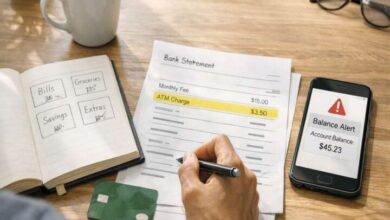
Privacy-conscious users are building two lanes. One lane covers essentials, like utilities, rent, and core services. The other lane covers experiments like apps and one-off buys. This keeps spending clean, and it makes cancellations painless, because you can shut off the ‘extras’ lane without collateral damage. It also reduces the number of merchants tied to your primary financial identity.
Endnote
Online payments will always involve tradeoffs. The win is choosing the tradeoffs on purpose, so convenience does not automatically cost you privacy. Start small, tighten one habit at a time, and your digital footprint shrinks faster than you think.