
Things To Look For In Stormwater Management Software For Growing Compliance Programs
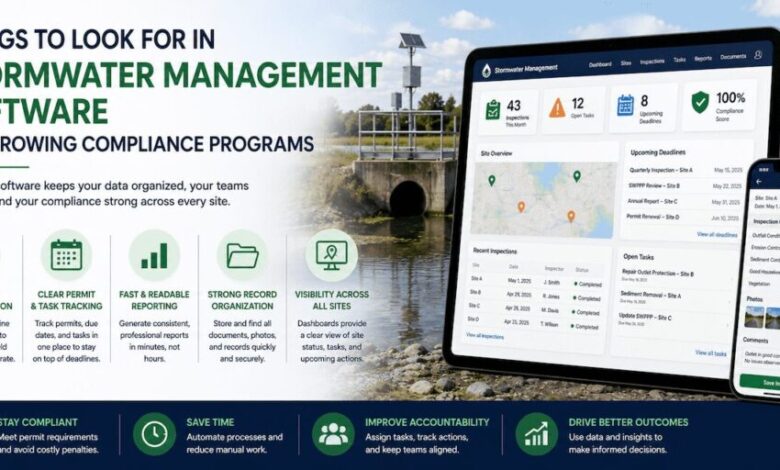
A growing compliance program brings more field work, more records, and more deadlines. Teams need clear reports, clean data, and a simple way to track inspections, permits, and corrective actions. When those tasks sit in scattered files, daily work slows down, and small details slip out of view.
That is why many teams look at stormwater management software as a practical tool for steady, organized work. The right system helps staff keep site data in one place, connect field activity to permit needs, and turn routine tasks into a smoother process. It also gives managers a clearer view of what needs attention across every site.
Choose easy field data collection
Field teams need a system that feels simple from the first day. Mobile forms should load fast, use clear labels, and match the way inspections happen on site. A clean layout saves time and keeps entries neat.
Offline access matters as well, especially at remote facilities and large properties. A good compliance platform stores notes, photos, and checklist items even when service drops. Once the signal returns, it should sync records without extra steps.
Look for clear permit and task tracking
Growing programs deal with many permit dates, inspection schedules, and follow-up items. A useful runoff compliance system should place those deadlines on one screen. That view helps teams act at the right time and keep work moving in the right order.
Task tracking also needs real structure. Staff should be able to assign actions, set due dates, and attach site notes or photos to each item. That setup turns a simple reminder into a working record that supports daily accountability.
Make reporting fast and readable
Reports should come together without a long manual process. Strong environmental compliance tools pull inspection details, rainfall data, and corrective actions into one report template. That saves staff hours and keeps records consistent across sites.
Readability matters just as much as speed. A solid reporting feature should create documents that managers, inspectors, and site teams can scan with ease. Clear sections, logical labels, and tidy export options make every report more useful.
Prioritize strong record organization
As programs grow, document volume rises fast. Photos, maps, training logs, site plans, and inspection records need a clear home inside the software. A well-built system keeps those files linked to the right site and the right activity.
Search tools make a big difference here. Staff should be able to pull up a past inspection, a permit record, or a corrective action in a few seconds. That kind of order helps teams answer questions quickly and keep audits smooth.
Check visibility across all sites
Managers need a broad view when they oversee several locations. Good water compliance software should have a smooth user interface. It should show site status, open actions, recent inspections, and upcoming deadlines in a simple dashboard. That view helps leaders spot patterns and direct support where it matters most.
Site-level detail still needs space in that same system. A useful platform lets users move from a portfolio view to a single property without hunting through menus. That balance keeps both managers and field staff on the same page.
A growing program needs software that keeps records clear, tasks visible, and reporting easy to manage. The best choice supports field teams, gives managers useful insight, and keeps permit work organized from site to site. When those pieces come together, stormwater management software becomes more than a database. It turns into a steady part of daily compliance work and helps the whole program run with greater clarity.