
Remote work makes teamwork feel a little more intentional. Sometimes that’s great. Sometimes it’s exhausting. But if you’ve ever finished a day of back-to-back video calls and thought, “We talked a lot… did we actually move anything forward?” — you’re not alone.
The good news is that remote collaboration can be genuinely effective (and honestly, calmer) once you stop trying to recreate an in-office day on a screen. The biggest unlock is usually shifting from constant real-time coordination to clearer written communication, better documentation, and a few shared norms that people can rely on. GitLab’s remote handbook is a strong example of this “bias toward async,” and Atlassian makes a similar point: distributed work struggles most when teams don’t have the right tools, norms, and ways of working in place.
In this article, we’ll focus on the benefits of remote collaboration and teamwork, plus the practical habits that help you actually get those benefits—without turning “teamwork” into a permanent meeting.
Quick note: This post supports our guide, which is a benefit of collaboration and teamwork?, where we break down the broader benefits and the mechanics underneath them.
What “remote collaboration” really means
Remote collaboration is not just “using tools.” It’s the ability to move work forward when people are not in the same place, and often not available at the same time. That last part matters more than we like to admit.
GitLab defines asynchronous work in a simple, practical way: do what you can with what you have, document it, hand off clearly, then keep going. That framing is helpful because it doesn’t romanticize remote work. It treats it like an operating system.
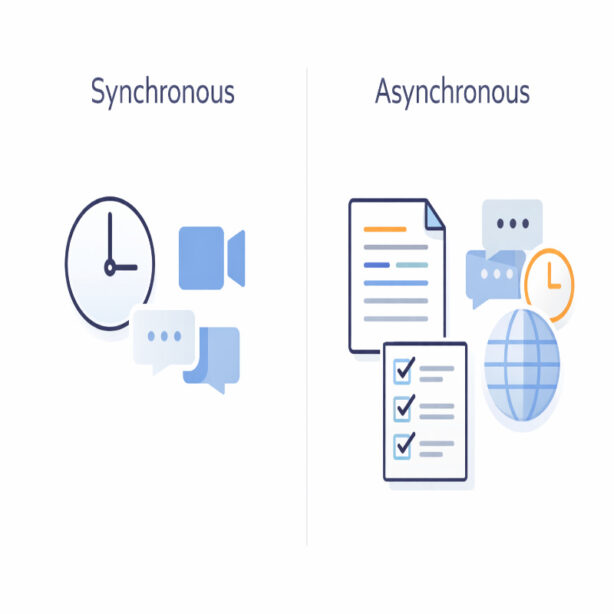
Atlassian also draws a clean line between synchronous communication (live, real-time) and asynchronous communication (anything not happening in real time, like email or comments). In remote settings, you’ll use both—but leaning on async more often is what reduces coordination stress.
Remote collaboration and teamwork benefits (the ones that actually show up)
Let’s keep this grounded. These benefits are real, but they show up most consistently when teams document decisions, set expectations, and protect focus time.
1) More focus and deeper work (less “waiting around”)
In a remote team that works asynchronously, people don’t have to pause just because a decision-maker is offline. GitLab argues that async work increases efficiency because the team can default to action instead of waiting for someone to be available. That “always default to action” idea sounds ambitious, but in practice it’s simple: write down what you know, propose a next step, and make it easy for someone to disagree or refine it later.
If you want to make this concrete, try a small rule: before asking for a meeting, write a 10–15 line proposal first. The proposal becomes the work. The meeting (if you still need it) becomes a review, not a fishing expedition.
2) Better inclusion across time zones and working styles
Async collaboration helps teams include people who are quiet in meetings, live in different time zones, or just think better with a bit of time. GitLab describes async as more inclusive because it removes time-zone hurdles, and it’s hard to argue with that—time zones are a real structural barrier, not a motivation issue.
Atlassian makes a related point: one reason distributed work fails is that companies keep relying on in-person practices, just transported onto Zoom. In other words, the “default settings” of collaboration are often biased toward whoever is awake, loud, and comfortable jumping in quickly.
3) Lower stress and fewer “always on” expectations
This one is a little delicate because remote work can also blur boundaries. Still, GitLab explicitly argues that asynchronous work can alleviate stress by reducing the expectation of immediate replies and creating more breathing room for deep work. That matches what many people feel when they move from constant pings to agreed response windows.
Separately, OSHA’s workplace stress guidance emphasizes that employers can support mental health through training, benefits, and a culture where people can talk about stress and seek support. Remote teams can’t rely on hallway check-ins, so it helps to be more deliberate about these signals.
Practical translation: agree on response-time norms. If “ASAP” is the default, people will behave like everything is urgent. And then, eventually, nothing is sustainable.
4) More durable knowledge (less “tribal memory”)
Remote collaboration forces a useful habit: writing things down. GitLab goes hard on this—its handbook-first approach treats documentation as the backbone of async communication, and it describes how documented decisions reduce ambiguity and help new hires self-serve context.
In plain terms: when your team documents decisions, you’re not just being organized. You’re building an institutional memory that survives vacations, handoffs, and turnover. If you’ve ever lost a week because “the person who knows that system” was out, you already understand the value.
If this is a pain point for your team, our post on collaboration tools and workflows goes deeper into “single source of truth” setups that don’t become busywork.
5) Fewer meetings (and better meetings when you do have them)
Atlassian is blunt here: many meeting-heavy habits carried over from office life are not best practice for distributed teams. They also list common tasks that may be better done asynchronously—like ideation, planning, and especially status updates (their “hot take” is that status meetings should never have been meetings). It’s hard to disagree if you’ve sat through a weekly status call where everyone reads what could have been a paragraph.
GitLab adds another useful constraint: if a meeting is primarily to document what will need to be written down anyway, it’s often more efficient to skip the meeting and write the doc. It’s a slightly annoying truth, perhaps, because writing takes effort. But it pays you back.

How to get these benefits (without becoming rigid)
Remote teamwork breaks down when teams treat “async” like a moral stance instead of a practical choice. GitLab actually says this directly: a strategic balance between synchronous and asynchronous can be most efficient, and async is not the goal unto itself.
So here’s a flexible set of norms you can test, adjust, and keep if they work. Think of these as “guardrails,” not rules carved into stone.
Start asynchronously, then meet to decide
Atlassian recommends doing “pre-work” asynchronously so synchronous time is used well. That’s the pattern: collect inputs in writing, let people reflect, then meet to decide (or to resolve the true disagreements).
It helps to time-box async feedback. If comments are open forever, decisions never harden.
Establish a working agreement
Atlassian suggests creating a working agreement to make implicit communication preferences explicit—what channels you’ll use, what belongs in a meeting, and what response times look like. This sounds formal, but it can be a single page. The key is that it’s shared.
If you’re not sure where to begin, borrow a few prompts: What is urgent? What is not? Where do decisions get documented? What does “done” look like for a handoff?
Make documentation a habit, not an afterthought
GitLab’s stance is pretty clear: you can’t do async communication without strong documentation. In practical terms, that means meeting notes that include decisions, a place where project status lives, and written handoffs when someone is out.
A small habit that works: end any decision with a short “Decision / Rationale / Owner / Next step” note. Four lines. That’s it. People will thank you later, even if they don’t say it.
Protect focus time (and normalize boundaries)
Atlassian warns about burnout in flexible schedules and recommends being intentional about boundaries. GitLab similarly highlights the mental load of constant chat and the value of creating mental space; they even suggest forcing functions like clearing messages on a cadence and not letting instant messaging become the center of urgency.
Remote collaboration feels better when people can go offline without guilt. That doesn’t mean disappearing. It means setting expectations so the team doesn’t interpret silence as neglect.

Common remote teamwork traps (and what to do instead)
Trap: “Slack is our source of truth”
Chat is fast, but it’s not a reliable memory. GitLab warns about communication splintering across too many channels and pushes teams toward a single source of truth for ongoing work. If a decision only exists in a chat thread, it’s basically a rumor.
Instead: use chat to point to the real artifact (doc, ticket, decision log). If you want to get really consistent, adopt the “always answer with a link” habit GitLab mentions—annoying at first, then strangely liberating.
Trap: status meetings that drain energy
Atlassian’s view is that status meetings don’t require back-and-forth; they require stakeholders to be informed, which can be done asynchronously. If your team is meeting mainly to “stay aligned,” you might be using meetings as a patch for missing documentation.
Instead: try async status updates for two weeks. Keep the same cadence, just change the medium. If an issue needs real discussion, schedule a smaller, sharper meeting for that issue only.
Trap: thinking “remote” means “always available”
GitLab describes how async reduces pressure for immediate responses, which can support mental health. OSHA’s guidance also emphasizes that employers can help by creating a trustworthy space for mental health discussions and ensuring training includes mental health and stress. Remote teams need this clarity because the line between “at work” and “near work” is thin.
Instead: agree on response windows per channel (e.g., chat within a few hours, email within a day, emergencies via a specific path). This removes the guesswork, and people stop refreshing their inbox like it’s a slot machine.
FAQ: quick questions teams ask
Is remote collaboration better than in-office collaboration?
It can be. Remote collaboration often improves documentation, autonomy, and time-zone inclusivity—especially when teams use asynchronous communication well. But it can also feel isolating or chaotic if norms are unclear, tools are scattered, or everything becomes a meeting.
Do we need fewer meetings or better meetings?
Usually both. Atlassian’s guidance leans strongly toward reducing meetings where async works (like status updates), then saving synchronous time for decision-making, relationship-building, and genuinely complex conversations.
What’s the simplest first step?
Move one recurring meeting to async for two weeks. Atlassian’s advice to “start slow” is practical: small changes can produce meaningful space. If your team sees clear wins, you’ll build momentum without forcing a huge change management effort.
Conclusion
Remote collaboration and teamwork benefits are real: more focus, better inclusion, stronger documentation, fewer low-value meetings, and—when you set boundaries—less stress. The pattern behind all of them is surprisingly consistent: write things down, agree on norms, and use meetings intentionally.
If you want the broader context (and the “why this works” mechanics), go back to the guide: which is a benefit of collaboration and teamwork?. And if you’re ready to tighten your system, the next practical step is collaboration tools and workflows—because tools don’t fix teamwork, but good workflows quietly do.