Applications and Benefits of Turned, Ground, and Polished Stainless Steel
Turned, ground, and polished (TGP) stainless steel is a high-precision material processed to meet strict industry standards for linear tolerance, smooth surface quality, and structural durability. Industries that rely on dependable mechanical performance and close dimensional controls often utilize TGP stainless steel for critical components. For those seeking solutions for demanding environments or precision assemblies, materials such as those at https://www.specialtysteel.com/product/316-316l-stainless-steel-turned-ground-polished/ are widely regarded as the gold standard in industrial circles.
The TGP process ensures that stainless steel meets the most stringent needs for straightness and roundness. These qualities help eliminate common issues with material assembly and longevity, making such products especially attractive for specialized engineering and manufacturing applications. As industry demands evolve, professionals continue to seek advanced materials that not only improve performance but also enhance long-term efficiency and safety.
Adopting TGP stainless steel enables manufacturers to ensure their products exceed expectations for corrosion resistance and wear, even in harsh or repetitive-use environments. With its ability to combine form and function, TGP stainless steel enables product designers and engineers to deliver on promises of innovation and reliability.
Because consistency and cleanliness matter, particularly in medical, aerospace, and food-grade applications, TGP stainless steel’s refined processing lends itself seamlessly to environments with strict regulatory standards and efficiency goals. Industry experts often highlight its value across a range of essential sectors.
Understanding TGP Stainless Steel
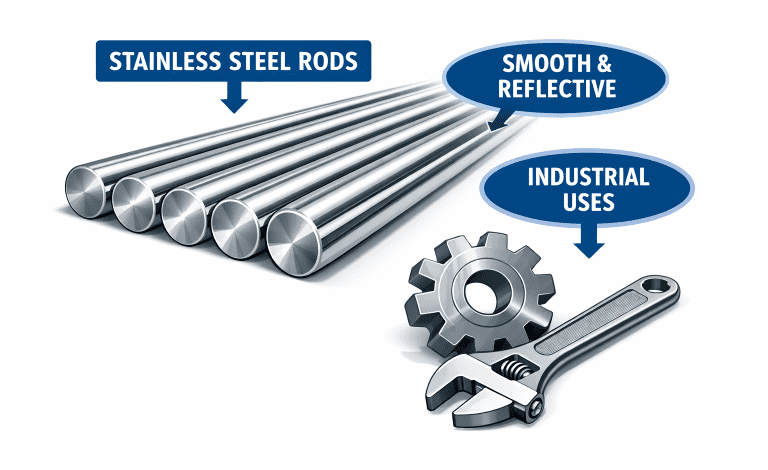
Turned, ground, and polished stainless steel undergoes an intensive multi-step process to enhance the metal’s suitability for precision engineering. The journey begins with turning, where raw stainless steel bars are machined to remove surface scale and achieve an approximate diameter. This is followed by the grinding phase, which uses abrasives to refine the diameter and improve straightness and roundness. Finally, the bars are polished to achieve a smooth, reflective, and contamination-resistant surface.
The result is a product with virtually no surface defects, heightened mechanical uniformity, and exceptional accuracy. These properties are essential in designs and assemblies where alignment, fitment, and reduced mechanical vibration are crucial. Precise bar stock also helps reduce the likelihood of component misalignment or premature wear in critical assemblies.
Key Benefits of TGP Stainless Steel
- Enhanced Dimensional Accuracy: TGP stainless steel delivers tolerances that meet or exceed strict industry requirements, ensuring seamless integration with mating parts and consistently repeatable assembly results.
- Improved Surface Finish: Polished finishes reduce friction and interaction with surrounding components, resulting in longer wear life and fewer maintenance interventions.
- Increased Strength and Durability: By removing imperfections and evening out internal stresses, TGP processing improves the stainless steel’s structural robustness for dynamic and high-load applications.
- Corrosion Resistance: TGP maintains stainless steel’s corrosion resistance, making it ideal for use in chemically aggressive, damp, or sanitation-sensitive environments.
Common Applications of TGP Stainless Steel
TGP stainless steel finds applications in a wide range of industries due to its unique advantages. For example, the automotive industry uses TGP bar stock for precision axles, steering columns, and drive shafts, ensuring both safety and durability. In the aerospace sector, TGP stainless bars are selected for aircraft landing gear and turbine shafts where reliability under high stress and fatigue is required. Medical-grade TGP stainless steel is ideal for surgical tools and diagnostic equipment, thanks to its non-porous and easy-to-sanitize surfaces.
- Automotive Industry: Used for structural and rotating parts where consistent mechanical strength is a necessity.
- Aerospace Sector: Relied upon for high-performance, fatigue-resistant parts subject to extreme forces and conditions.
- Medical Equipment: Preferred for durable and hygienic medical instruments and device components.
- Industrial Machinery: Ensures smooth, maintenance-minimized operation in conveyor systems and hydraulics.
For further reading on the industrial impact of stainless steel, you may find this article from the Associated Press useful.
Comparing TGP with Other Finishing Processes
There are several methods for preparing stainless steel bars, including cold drawing and hot rolling. However, each process leaves a different mark on the final product’s composition and usability. TGP bars are widely preferred over cold-drawn bars due to their superior straightness, virtually stress-free structure, and best-in-class surface finish. While cold-drawn bars can pose challenges, such as introduced stress and potential warping during subsequent processing, TGP minimizes these risks, resulting in stable, dimensionally consistent stock. This is particularly vital where bearing fits and shaft alignments can directly impact operational safety and lifespan.
Choosing the Right TGP Stainless Steel for Your Needs
When selecting TGP stainless steel for an application, several aspects should be considered to ensure the best fit for specific operational requirements. Grade selection is critical; for instance, 316 and 316L are excellent for enhanced corrosion resistance and lower carbon content requirements. The specified dimensions and tolerances must align with the assembly and operational requirements to avoid integration issues. Additionally, consider whether a high-polish surface finish is mandatory for functional or visual reasons, as with exposed machine parts or architectural elements.
Understanding how different grades perform under varied environmental conditions is essential.
Maintenance and Care for TGP Stainless Steel
To maximize the operational lifespan of TGP stainless steel components, regular cleaning with industry-approved solutions is recommended to remove residues or contaminants that might accelerate corrosion. Routine inspection schedules help identify early signs of surface wear, pitting, or material fatigue. For moving parts, appropriate lubrication reduces friction and maintains efficiency. Consistently applying these maintenance protocols will keep TGP stainless steel at peak performance and avoid costly downtime.
- Use pH-neutral cleaners and soft cloths for routine cleaning.
- Inspect for scratches, discoloration, or distortion that could compromise function.
- Apply the appropriate lubricants as specified by the equipment manufacturers.
Conclusion
Turned, ground, and polished stainless steel is essential for applications requiring unmatched dimensional precision, structural reliability, and a high-quality surface finish. Its benefits are reflected in increased component longevity and reduced maintenance needs across a variety of industries. By understanding proper selection criteria and adopting best-practice maintenance, businesses can ensure dependable performance from their TGP stainless steel investments for years to come.