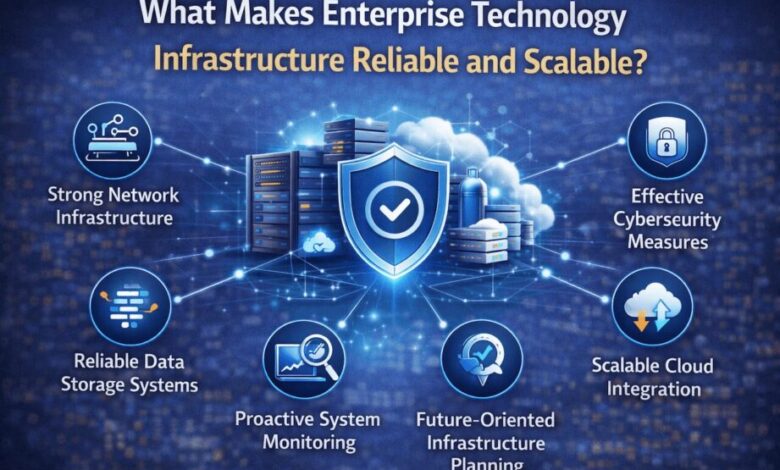
What Makes Enterprise Technology Infrastructure Reliable and Scalable?
Large organizations rely heavily on technology to manage operations, communication, and data. System interruptions, slow networks, and weak infrastructure can disrupt productivity across departments. These challenges create delays and affect business efficiency when technology systems fail to perform reliably.
Many organizations rely on enterprise IT services to maintain stable technology environments and support business expansion. Strong infrastructure helps companies manage complex systems and increasing workloads. Read this article to gain more knowledge and check these factors that support reliable and scalable enterprise technology systems.
Strong Network Infrastructure
Network stability forms the foundation of enterprise technology systems. A well-structured network allows employees to access data, applications, and communication tools without interruptions. Businesses depend on stable connectivity to maintain daily operations.
Network reliability also supports secure data exchange across departments. However, weak networks can create delays and communication problems. Strong infrastructure design improves system performance and ensures smooth connectivity throughout the organization.
Reliable Data Storage Systems
Data storage plays a critical role in enterprise environments. Businesses handle large volumes of information related to operations, customers, and internal processes. Secure and accessible storage systems help maintain data integrity.
Reliable storage solutions provide structured data management and quick access when needed. Therefore, organizations benefit from systems that protect information while maintaining accessibility. Proper storage systems support long-term operational stability.
Effective Cybersecurity Measures
Security protection remains essential for enterprise technology environments. Large organizations manage sensitive information that requires strong digital protection. Weak security systems can expose businesses to serious risks.
Advanced protection strategies improve system safety and data protection. However, security frameworks must remain updated to address evolving digital threats. Strong cybersecurity helps maintain trust and protects critical business data.
Scalable Cloud Integration
Cloud technology provides flexibility for enterprise infrastructure. Cloud-based systems allow organizations to expand storage, computing power, and application access when business needs increase. Cloud integration also improves collaboration and remote access capabilities. Hence, companies maintain operational flexibility while supporting workforce productivity. Scalable cloud platforms allow businesses to adapt technology resources as operational demands grow.
Proactive System Monitoring
System monitoring helps organizations detect technical issues before they affect operations. Monitoring tools track performance indicators and identify unusual system behavior. A proactive monitoring strategy allows technical teams to resolve problems early. Therefore, businesses maintain system reliability and reduce unexpected downtime. Early detection supports continuous operations across enterprise environments.
Structured Technology Management
Enterprise systems require organized management to remain effective. Technology infrastructure includes multiple platforms, applications, and communication tools that require coordination. Professional support teams help maintain these complex systems. A strong framework supported by enterprise IT services ensures consistent system maintenance and performance management. Hence, businesses maintain reliable infrastructure while focusing on operational priorities.
Future-Oriented Infrastructure Planning
Enterprise organizations must prepare technology systems for future expansion. Business growth increases data usage, network demand, and application complexity. Strategic infrastructure planning helps organizations adapt to these changes. However, structured planning also ensures technology investments align with long-term business goals. A forward-looking approach supports scalability and operational stability.
Reliable and scalable technology infrastructure supports the success of modern enterprises. Strong networks, secure data storage, and advanced cybersecurity form the foundation of stable systems. Cloud integration and proactive monitoring improve flexibility and operational continuity. Structured management and long-term planning also strengthen technology environments. Organizations that invest in reliable infrastructure maintain efficiency and adaptability as business demands grow. Strong technology systems allow enterprises to operate smoothly while preparing for future expansion.