
8 features every Know Your Customer solution needs
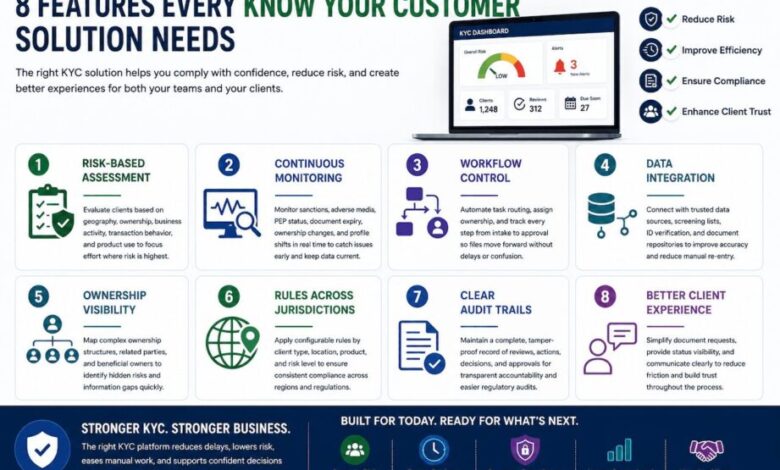
Client due diligence now carries tighter deadlines, heavier evidence demands, and closer supervisory review than many firms faced even a few years ago. Software choice affects staffing pressure, file quality, and decision speed at the same time.
A dependable platform helps teams gather records, judge exposure, explain conclusions, and refresh stale information before it weakens control. Poor systems create duplicated effort, missed warning signs, and preventable delays that increase operational strain.
Risk-based assessment
No two clients present the same level of exposure, so review intensity should reflect actual risk. A well-built Know Your Customer Solution weighs geography, ownership layers, business activity, transaction behavior, and product use before assigning deeper scrutiny.
That method keeps attention on files with greater potential for harm. Sound prioritization also reduces unnecessary handling for lower-risk cases, which helps teams maintain steadier progress across large client populations.
Continuous monitoring
Periodic review alone leaves long stretches where meaningful change can pass unnoticed. Dependable software watches for sanctions matches, expired documents, ownership amendments, and material profile shifts as they happen.
Early notification gives analysts time to act before stale records affect a decision. Ongoing observation also limits the need for full remediation after every minor update, which preserves effort while keeping documentation current.
Workflow control
Many review delays begin with poor handoffs, unclear ownership, or missing evidence. Strong systems route tasks in sequence, assign responsibility, and capture each action from intake through final signoff.
Clear order reduces stalled files and missed approvals. Staff also spend less time chasing updates through email, because the platform presents open items, pending judgments, and overdue steps within one controlled workspace.
Data integration
Client information loses reliability when teams re-enter the same facts across disconnected tools. Effective software links internal records with trusted outside sources, screening feeds, identity checks, and document stores.
Those connections improve accuracy while lowering clerical burden. Better linkage also lets reviewers compare declared details with external evidence, which supports firmer verification and cleaner documentation during onboarding and later refresh cycles.
Ownership visibility
Layered ownership structures remain a frequent source of hidden exposure and review delays. Strong platforms map related parties, control relationships, and beneficial owners in a form that analysts can read quickly.
That visibility helps teams detect missing data earlier. It also supports sound judgment when cross-border entities, nominee arrangements, or shared control raise concerns that plain text records may fail to show clearly.
Rules across jurisdictions
Large institutions often serve clients in several regions with different due diligence expectations. Useful platforms apply policy rules by client type, location, product use, and exposure level without repeated manual interpretation.
Consistent logic improves review quality across separate teams. Central rule management also helps firms respond faster when local requirements change, because updates can be applied without rebuilding the entire operating process.
Clear audit trails
Supervisors expect institutions to show what was reviewed, why a decision was reached, and who approved the result. Strong software preserves evidence, timestamps, actions, and rationale in one traceable record.
That history supports accountability during internal examination and external inspection. Clear documentation also reduces time spent reconstructing earlier judgments when a file returns for renewed attention after a material alert or change.
Better client experience
Clients notice friction when requests arrive twice, documents seem to vanish, or progress stays unclear for days. Effective platforms reduce those pressure points through organized outreach, fewer duplicate asks, and more consistent review paths.
That improvement benefits both sides. Faster movement helps firms open accounts sooner while giving legitimate applicants a process that feels orderly, respectful, and competently managed from beginning to end.
Conclusion
The strongest platforms do more than gather paperwork and store client records. They help institutions judge exposure accurately, react to change quickly, and keep control over documentation as profiles shift over time.
Eight capabilities matter most: risk sorting, ongoing monitoring, orderly workflow, connected data, ownership mapping, jurisdiction rules, complete audit history, and smoother client handling.
Together, these functions reduce delay, ease manual strain, and support stronger compliance performance.