
How Website Accessibility Tools Are Shaping the Future of Inclusive Design
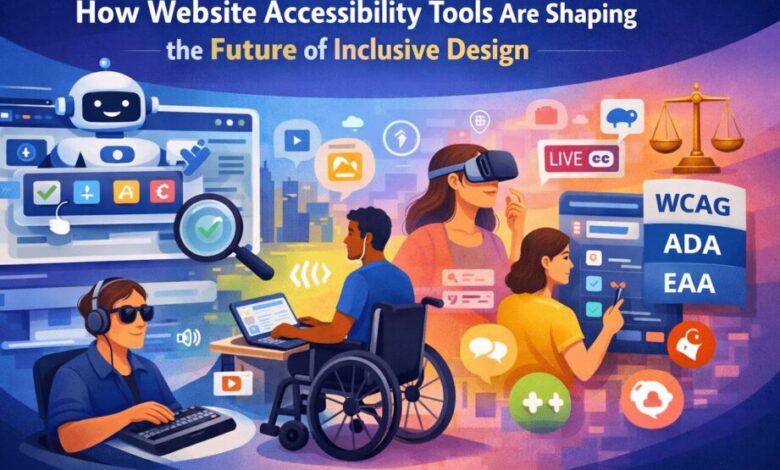
Digital experiences increasingly influence how people learn, work, and interact, making inclusive design a foundational concern rather than a secondary consideration. As audiences become more diverse, designers and developers are challenged to create websites that accommodate various abilities, devices, and methods of navigating content. Accessibility-focused tools now play a crucial role in identifying barriers early in the design process, enabling teams to align usability goals with legal standards and ethical responsibilities.
By offering audits, simulations, and structured feedback, these tools support more informed design decisions over time. Solutions like the Tabnav accessibility checker can help teams evaluate keyboard navigation and interaction flow, reinforcing awareness of user experience details that are often overlooked. As accessibility tools continue to evolve, they are shaping design practices that prioritize adaptability, long-term usability, and broader participation across digital environments. This shift encourages consistency, accountability, and iteration throughout planning, development, and ongoing content maintenance cycles.
The Rise of AI-Powered Accessibility Solutions
Artificial Intelligence (AI) is transforming how accessible websites are created and maintained. AI solutions can analyze pages in real-time, identify accessibility issues such as missing alt text and poor contrast, and recommend or automate fixes to address these issues. For example, machine learning algorithms can generate descriptive alt text for images, benefiting users who rely on screen readers to access content. This automation reduces the manual effort required for website accessibility, enabling quicker updates and compliance. Additionally, AI-powered live captioning improves video content for the Deaf and hard-of-hearing communities, enhancing accessibility in educational and workplace environments. These innovations enable organizations to stay ahead of evolving regulations and best practices without requiring extensive in-house expertise.
Personalized Accessibility Settings
The era of one-size-fits-all web design is fading, giving way to a new emphasis on highly personalized user experiences. Modern accessibility tools now empower individuals to set their own preferred text size, contrast, and line spacing, as well as switch to distraction-free reading modes that suit their specific needs. These adjustments can be critical for people with low vision, dyslexia, or attention-related challenges. Voice navigation, screen magnifiers, and on-the-fly translation features are being integrated directly into websites or offered as browser-based add-ons, resulting in a more seamless and dignified digital experience. For many users, the ability to control the interface extends beyond convenience—it’s key to achieving genuine autonomy in the digital age. This marked shift towards customization is reducing the friction and frustration users once faced, making it far easier for everyone to navigate even the most complex online environments.
Integration of Augmented Reality (AR) and Virtual Reality (VR)
Augmented and virtual reality are rapidly reshaping how we interact with and experience digital environments, bringing a new dimension to accessibility. Traditionally, AR and VR spaces presented significant challenges for users with mobility or sensory impairments due to complex interfaces and a lack of alternative navigation options. Today, however, leading applications are weaving accessibility into the very fabric of their platforms. Features such as haptic feedback, which can guide users with limited vision through touch, and sophisticated descriptive audio guides that narrate three-dimensional spaces, are making immersive environments available to more people. Meanwhile, VR platforms are also adding accessible navigation controls, alternative input devices for those unable to use standard controllers, and enhanced subtitle or sign language systems for real-time communication. These advances promise a more immersive, engaging, and fundamentally accessible digital future, particularly as spatial computing and the metaverse become mainstream.
Compliance with Global Accessibility Standards
International laws and regulations are playing a growing role in pushing accessibility to the forefront of the digital agenda. The European Accessibility Act (EAA) is a prime example: this sweeping legislation mandates that digital products and services across all EU member states be accessible to people with disabilities by 2025, covering not only websites but also apps, e-commerce platforms, and even some consumer devices. In the United States, the more vigorous enforcement of provisions in the Americans with Disabilities Act (ADA) and Section 508 is prompting organizations to address digital barriers before they result in costly lawsuits proactively. Beyond legal risk, compliance is a means for organizations to demonstrate a genuine commitment to social responsibility and inclusion, thereby building trust and goodwill with all stakeholders. By embedding accessibility standards into every project from the outset, businesses can not only meet but also exceed the minimum legal requirements. To learn more about digital accessibility laws and international standards, consult the WCAG guidelines from W3C.
Voice Navigation and Assistive Technology Integration
Voice navigation is becoming a key feature in accessible web design, driven by the widespread adoption of digital assistants like Siri, Alexa, and Google Assistant. Modern websites are being optimized to enable fully voice-controlled navigation, ensuring people with limited mobility, dexterity, or vision can browse the web and complete transactions independently. This trend is significant as the global population ages, and as more users experience temporary limitations due to injury or circumstance. In addition to voice assistants, the tight integration of websites with screen readers, Braille displays, and other tactile input devices is creating adaptive browsing environments that benefit a wide range of users. Advances in natural language processing also mean that conversational interfaces are now more effective than ever at understanding complex commands and contexts, making technology truly accessible to a broader range of people.
Designing for Neurodivergent Users
As digital inclusion evolves, there is increasing awareness that accessibility should encompass not just physical and sensory challenges but also cognitive and neurodivergent conditions. Modern websites are prioritizing the needs of neurodivergent users, including those with ADHD and autism. Key features include simplified layouts, reduced clutter, consistent navigation, “focus mode” options to minimize distractions, and customizable content pacing. Enhancements, such as toggling motion effects and supporting keyboard navigation, further improve usability. By focusing on clarity and reducing cognitive overload, websites can become more inclusive and accessible to all.
Conclusion
Website accessibility tools are playing a pivotal role in accelerating the movement toward truly inclusive digital design. By embracing advancements in AI, offering flexible personalization, integrating AR and VR accessibility features, and adhering to robust compliance frameworks, organizations are placing accessibility at the heart of their digital strategies. The ongoing evolution of these tools not only enhances usability for individuals with disabilities but also creates smoother and more enjoyable online experiences for all users. Ultimately, making the web accessible to everyone isn’t just about meeting legal requirements—it’s about building a more open, fair, and innovative digital world for the future.