
Kia EV6 Charging Guide: Speeds, Plugs, and Trips
If you’re here because the Kia EV6 looks amazing on paper but charging still feels like the “unknown variable,” you’re not alone. The funny thing is, most EV frustration doesn’t come from the car. It comes from the gaps between the car, the charger, the app, the parking situation, and your schedule.
This guide is about making those gaps smaller. We’ll talk about home charging, public fast charging, what that famous 10–80% claim really means, and how to plan trips without turning your drive into a constant battery math problem.
And yes—because it keeps coming up—this is also where we unpack NACS, CCS, and Tesla Supercharger access in a way that’s practical, not overly technical. If you want the bigger-picture overview of the car itself, start with kia ev6: a real-world buyer’s guide.
Kia EV6 charging: the quick mental model
I think the simplest way to understand Kia EV6 charging is to separate it into two worlds:
- At home: slower, cheaper, and usually easier. It’s about routine.
- On the road: faster, more variable, and sometimes a bit chaotic. It’s about strategy.
If you can set up “charge at home” as your default, most of your charging stress disappears. That’s not marketing—overnight charging is how many EV drivers cover day-to-day needs, and it’s a totally normal pattern.
If home charging isn’t possible (apartment parking, street parking, shared garages), you can still own an EV6. It just becomes more like fueling a gasoline car: you’ll use public charging regularly, and you’ll care a lot more about station reliability.
Charge at home: what to expect (and what to check)
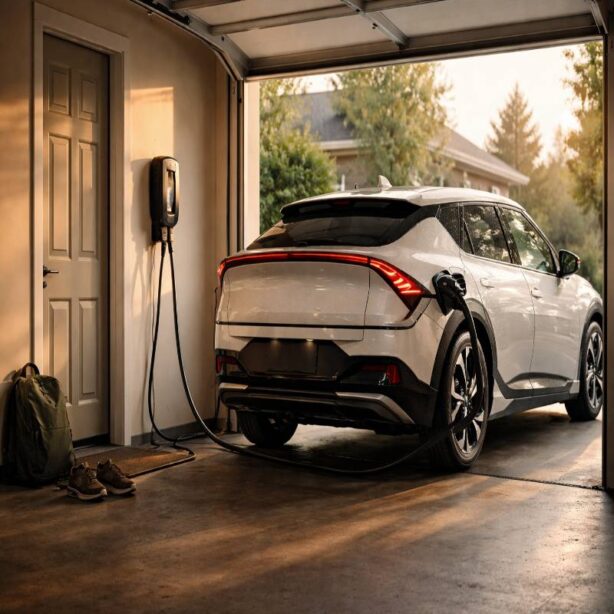
Home charging is the part that sounds boring, but it’s the part that makes EV ownership feel effortless. The U.S. Department of Energy’s Alternative Fuels Data Center has a surprisingly down-to-earth overview of charging at home, including Level 1 vs Level 2, outdoor safety basics, and why a licensed electrician matters for many installs.
Level 1 vs Level 2 (in plain English)
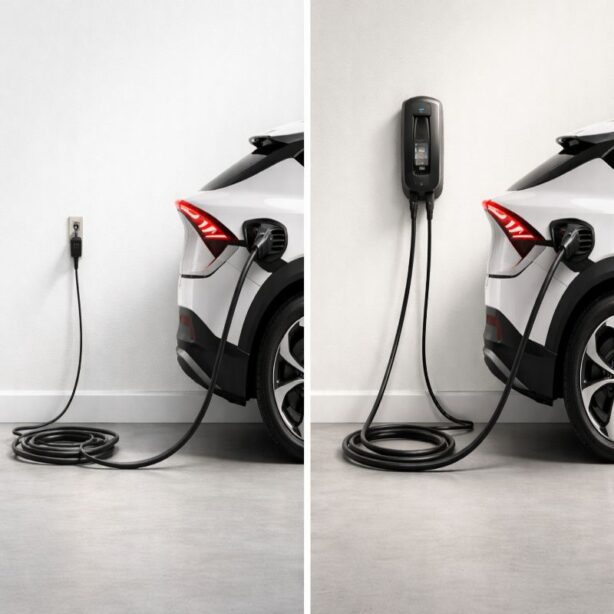
Level 1 is the “standard outlet” approach. It’s slow, but for some people it’s enough—especially if daily driving is modest and the car sits parked for long stretches.
Level 2 is what most EV owners think of as a “real” home setup: faster charging using 240V equipment. It typically turns overnight parking into meaningful range added by morning, which is the whole point.
A small reality check: if you’re planning Level 2, it’s not just the charger. It’s your panel capacity, wiring, and whether you’ll need a new circuit. Some homes are ready. Some aren’t. That’s normal, and it’s better to learn it early than after the EV is already in your driveway.
If your decision is still “which EV6 should I buy,” you can jump to which Kia EV6 trim should you buy? and come back here once you know what battery/trim you’re aiming for.
Public charging basics: why “fast DC charging” varies so much
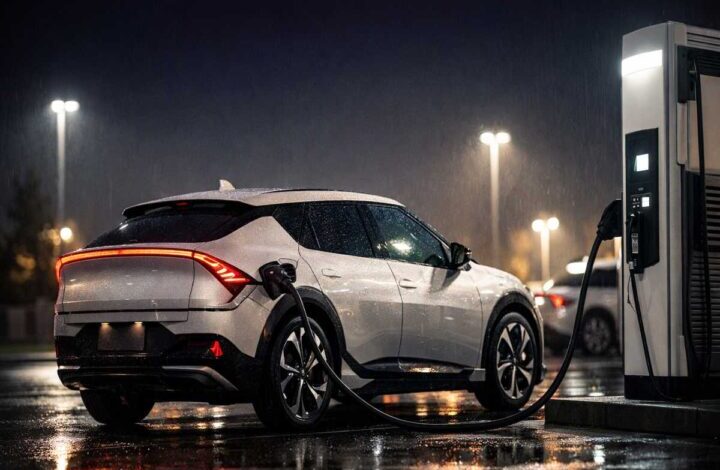
Public charging gets described like it’s one thing. It isn’t. There are different charger types, different connector standards, and different power levels. The U.S. Department of Transportation has a helpful overview of charger types and speeds that explains why DC fast charging is used for quick top-ups and why it’s commonly discussed in “up to 80%” terms.
If you want a clean authority link in your article, the phrase to link is already in your text: fast DC charging.
The 10–80% idea (and why it’s not just a random number)
The EV6 is often associated with very quick charging sessions—commonly framed as 10–80% in about 18 minutes on a 350 kW DC fast charger under ideal conditions. But here’s the part people don’t say out loud: even when the car is capable, the charging session can only be as good as the station, the temperature, and your arrival state-of-charge.
Also, charging usually slows down as the battery gets fuller. That slowdown is called tapering, and it’s normal battery behavior. Practically, it means the first part of the session can feel impressively fast, and the last part can feel like it’s taking forever.
This is why “two shorter stops” can sometimes beat “one long stop.” It sounds counterintuitive. Then you try it once on a road trip and think, “Oh. That’s what everyone meant.”
Road trips: how to plan stops without losing your mind
Trip planning is where EV charging goes from a technical topic to a human one. You’re not trying to win an efficiency contest. You’re trying to arrive with enough battery to feel calm, not fragile.
A practical road-trip routine that works
- Start the day with a higher charge than you think you need if your first charging stop is uncertain. It buys flexibility.
- Aim to arrive at fast chargers low-ish (not terrifyingly low, just low enough that the car can take power quickly).
- Don’t chase 100% on DC fast charging unless you truly need it. The time cost can be disproportionate, and many resources explain why fast charging is typically framed to 80%.
- Always keep a backup station in mind if you’re traveling at busy times.
Sometimes you’ll get a perfect stop: open stalls, stable power, quick session, done. Other times you’ll run into congestion, reduced power, or a station that’s just… not having a good day. That’s when it helps to remember you’re planning for a system, not a single charger.
If you want a deeper “ownership rhythm” view—what this looks like week-to-week, not just on trips—link naturally to living with a Kia EV6 (costs and daily use).
NACS, CCS, and Tesla Supercharger access (especially in the US)
This is the part that feels messy until it suddenly doesn’t. There’s a transition happening in North America, and “NACS” has become the shorthand for it.
The U.S. EPA’s EV charging FAQ does a good job explaining that DC fast charging uses vehicle-specific connectors (and names CHAdeMO, CCS, and NACS), and it reminds drivers to check connector and adapter compatibility before they plug in.
What Kia says about Kia Charge Pass and adapters
Kia’s own Kia Charge Pass page is unusually specific: it describes access to Tesla Superchargers for certain Kia EVs beginning Spring 2025, and it notes that if your vehicle has a CCS charging port, you’ll need a Kia NACS adapter to use a NACS-compatible charging station.
That’s worth linking directly in your article right where the phrase appears: Kia Charge Pass.
A small but important nuance: access doesn’t automatically mean you’ll always charge at the fastest possible rate everywhere. Superchargers can be incredibly convenient, especially for availability and location, but actual charge speeds depend on the vehicle and station details. It’s still a win—just a nuanced one.
What to verify before you rely on Supercharger access
- Whether your EV6 has a CCS port or NACS port (this can vary by model year and market).
- Whether you need an adapter, and whether it’s the Kia-approved one described by Kia.
- Whether the stations on your usual routes are compatible and available in your app.

How to get consistently faster charging (the “boring” tips that matter)
Some charging advice is too general to be useful. But a few habits really do change your experience:
- Use fast charging for trips, not for everything. If you can do most charging at home, do it. It’s easier on your schedule.
- Preconditioning matters. If your EV6 supports battery preconditioning to a fast charger, use it—cold batteries tend to charge slower.
- Stop thinking in percentages only. Think in “minutes stopped” and “miles added while I take a break.” It’s a gentler mental model.
- Leave when it’s time. If you’re at a busy station, charging past the useful part of the curve can cost everyone time (and sometimes money, depending on idle or congestion fees).
And yes, I’m aware that I just told you to be practical and considerate like a perfect citizen. Real life is messier. Sometimes you’ll charge longer because you needed a longer break. Sometimes you’ll unplug early because you’re impatient. The goal isn’t perfection. It’s a routine that usually works.
Common Kia EV6 charging questions (quick answers)
Is “10–80%” the right target on road trips?
Often, yes. It’s a common fast-charging pattern because charging slows as the battery fills, and public resources describe DC fast charging in “to 80%” terms for that reason. If you need more to reach your next stop comfortably, charge longer—but do it knowingly, not automatically.
Do I need home charging to own an EV6?
No, but it helps a lot. With home charging, your EV6 can feel like it’s always ready. Without it, you’ll rely on public stations more frequently, and station reliability becomes part of ownership.
Can I use any charger?
For Level 1 and Level 2 charging, compatibility is broad. For DC fast charging, connector types and compatibility matter, and the EPA notes that connectors can be vehicle-specific (CHAdeMO, CCS, NACS), so it’s smart to confirm what your EV6 supports before you plan a route around a certain network.
One last thing (because it’s the truth)
Kia EV6 charging can be genuinely easy. But the ease usually comes from a few things lining up: a stable home setup, a couple of reliable public stations near your routines, and a road-trip approach that treats charging stops as breaks rather than interruptions.
If you want the bigger context—range, trims, comfort, and whether the EV6 is the right fit overall—go back to kia ev6: a real-world buyer’s guide. It’s the piece this cluster article is meant to support, and it’ll help you connect charging decisions to the car you’re actually buying.