How FTTH Connectivity Systems Solve Rural Broadband Challenges
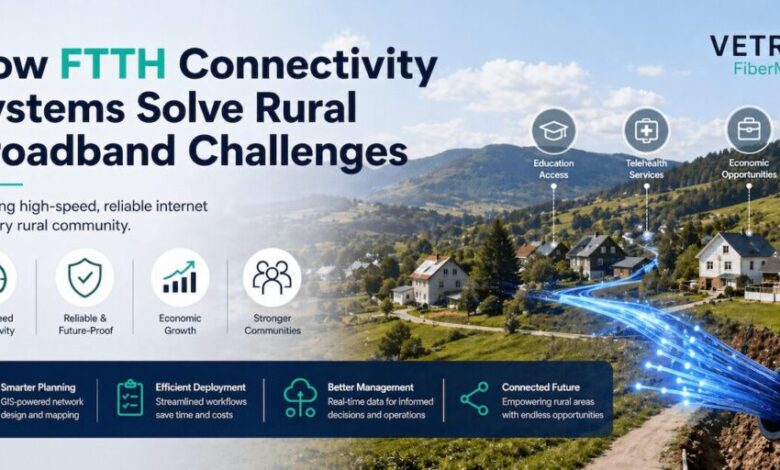
Access to high-speed internet is essential in today’s digital age, yet rural areas often lag behind urban centers in broadband availability. FTTH connectivity systems offer a viable solution to bridge the digital divide, providing reliable, high-speed internet to underserved communities. VETRO FiberMap, a leading provider of fiber management GIS platforms, specializes in helping broadband providers, municipalities, and telco engineers design and build next-generation internet infrastructure. Their cloud-based platform is tailored to meet the needs of small and mid-sized ISPs and community fiber networks, enabling efficient, scalable fiber network deployment.
Understanding the challenges in rural broadband deployment
Deploying broadband in rural areas presents several challenges:
- High infrastructure costs: The low population density in rural regions leads to higher costs per household for broadband infrastructure.
- Geographic barriers: Difficult terrains and vast distances complicate the installation and maintenance of broadband networks.
- Limited return on investment: Fewer potential subscribers can deter service providers from investing in rural broadband expansion.
FTTH: a solution to rural connectivity challenges
FTTH systems offer several advantages that make them suitable for rural broadband deployment:
- High-speed connectivity: FTTH provides faster and more reliable internet compared to traditional copper-based networks.
- Scalability: Fiber networks can be expanded and upgraded to meet increasing demand without high additional costs.
- Longevity: Fiber optic cables have a longer lifespan and require less maintenance, reducing long-term operational costs.
Strategies for facilitating FTTH deployment in rural areas
To overcome the challenges of rural broadband deployment, the following strategies can be employed:
- Public-private partnerships: Collaborations between government entities and private companies can pool resources and share risks, making projects more viable.
- Innovative financing models: Utilizing grants, subsidies, and low-interest loans can alleviate the financial burden on service providers.
- Community engagement: Involving local communities in the planning and implementation process ensures that the network meets their specific needs and encourages higher adoption rates.
The role of VETRO FiberMap in rural FTTH deployment
VETRO FiberMap offers a comprehensive platform that streamlines the planning, design, and management of fiber networks. Key features include:
- Network visualization: Interactive mapping tools provide a clear overview of existing infrastructure and potential expansion areas.
- Data integration: The platform integrates various data sources, facilitating informed decision-making.
- Project management: Tools for tracking progress, managing resources, and ensuring timely completion of deployment projects.
Additionally, VETRO FiberMap emphasizes collaboration among stakeholders by providing a shared digital workspace. This real-time collaboration helps construction teams, designers, and municipal officials stay aligned at each phase of the network build. By integrating project data, VETRO enables more precise budget management and forecasting, which is critical in the high-stakes environment of rural broadband expansion. This holistic approach reduces inefficiencies, shortens project timetables, and ensures accountability throughout the FTTH rollout. Through mobile-enabled field tools, VETRO FiberMap allows technicians in rural environments to collect and upload data from remote locations, increasing data accuracy and reducing delays caused by paper-based reporting. This powerful feature is especially vital for rural ISPs managing infrastructure across large, dispersed territories.
Economic and social benefits of rural FTTH deployment
Implementing FTTH in rural areas yields significant benefits:
- Economic growth: Enhanced connectivity attracts businesses, supports remote work, and stimulates local economies.
- Educational opportunities: High-speed internet enables access to online learning resources and virtual classrooms.
- Healthcare access: Telemedicine services become more accessible, improving healthcare outcomes for rural populations.
In addition to these direct benefits, FTTH deployment drives innovation in agriculture by supporting precision farming technologies, such as remote monitoring of crops and livestock via IoT sensors. Furthermore, local governments can implement smart community initiatives, including public Wi-Fi, connected infrastructure, and emergency communication systems—thanks to robust fiber backbones. These opportunities lead to a more resilient and thriving rural environment, where residents can stay connected with urban centers, access government services, and participate more fully in the digital economy.
On a social level, improved connectivity helps reduce the sense of isolation that can affect rural populations, making it easier for families to stay connected, access telehealth for mental and physical well-being, and engage with diverse cultural and entertainment options online.
Future prospects for rural FTTH expansion
The future of rural FTTH expansion is promising, with ongoing technological advancements and supportive policies. Continued investment and innovation are expected to reduce deployment costs further and enhance network performance, making high-speed internet accessible to more rural communities.
Further, emerging trends such as open-access fiber networks may reshape the deployment landscape in rural areas, encouraging competition and driving down consumer prices. Partnerships among local co-ops, municipalities, and national infrastructure funds are increasingly common, pooling expertise and resources to support sustainable broadband growth.
As the demand for bandwidth continues to rise due to online education, telehealth, remote work, and digital agriculture, FTTH networks will become a vital utility on par with water, electricity, and roads. Policy frameworks at both state and federal levels are likely to continue incentivizing rural build-outs, including tax breaks, new grant programs, and relaxed regulatory barriers that facilitate faster fiber deployment. Ultimately, the evolving landscape ensures that rural regions can fully participate in the global digital economy, laying the foundation for long-term prosperity.
Frequently asked questions
What is FTTH?
FTTH stands for Fiber-to-the-Home, a broadband network architecture that delivers high-speed internet directly to residences via fiber-optic cables.
Why is FTTH preferred over other broadband technologies?
FTTH offers higher speeds, greater reliability, and better scalability compared to traditional copper-based networks.
How can rural communities benefit from FTTH?
Rural communities gain improved access to education, healthcare, and economic opportunities through reliable high-speed internet.
What role does VETRO FiberMap play in FTTH deployment?
VETRO FiberMap provides tools for efficient planning, design, and management of fiber networks, facilitating successful FTTH deployment.
Are there financial assistance programs for rural FTTH projects?
Yes, various government grants, subsidies, and low-interest loans are available to support rural broadband initiatives.
By leveraging FTTH connectivity systems and strategic planning, rural areas can overcome broadband challenges, fostering economic growth and enhancing quality of life.
Conclusion
Fiber-to-the-Home (FTTH) technology is transforming rural connectivity by delivering high-speed, reliable internet directly to homes, bridging the digital divide that has long affected underserved communities. While deploying broadband in rural areas presents challenges, such as high infrastructure costs, geographic obstacles, and limited ROI, strategic planning, public-private partnerships, and innovative financing solutions make these projects feasible. Platforms like VETRO FiberMap play a critical role by streamlining network design, visualization, project management, and stakeholder collaboration, ensuring efficient and accurate deployment.
The benefits of rural FTTH extend beyond faster internet. Enhanced connectivity drives economic growth, supports remote work, improves access to education and telemedicine, and enables advanced agricultural and smart community technologies. As demand for bandwidth continues to rise, continued investment, policy support, and technological innovation will further expand FTTH networks, ensuring rural populations can fully participate in the digital economy. Ultimately, FTTH deployment is not just about infrastructure, as it is about empowering communities, fostering resilience, and enabling long-term prosperity.