Proactive IT Solutions: Key Strategies for Modern Business Success
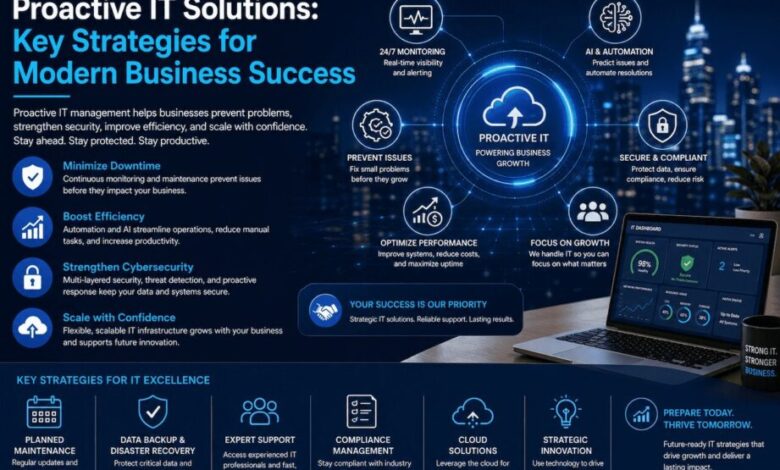
In today’s dynamic digital era, staying ahead of technological challenges is critical for business competitiveness. Companies across industries are recognizing that technological resilience, operational efficiency, and scalable systems are fundamental to growth and long-term viability. Embracing an agile mindset through Managed IT Services California means harnessing proactive IT solutions that prevent problems before they arise and set a foundation for innovation.
As IT environments become increasingly complex, businesses face higher expectations for reliability and data protection. Prioritizing proactive IT management not only reduces costly downtime but also supports continued productivity and customer trust. Businesses that adopt AI-powered monitoring and automation gain an edge by staying ready to adapt as their environments evolve.
Importance of proactive IT management
Proactive IT management is more than a preventative mindset. It means continuously anticipating, monitoring, and addressing potential technology issues before they escalate into major disruptions.
By investing in best practices such as scheduled maintenance, regular patching, and comprehensive system monitoring, businesses significantly minimize system outages and reduce the risk of unexpected failures. These efforts translate directly to cost savings, greater uptime, and a more resilient business environment.
Instead of waiting for problems to occur, IT professionals now leverage predictive analytics and detailed reporting tools to foresee bottlenecks and vulnerabilities. This forward-thinking method ensures that small glitches are resolved well before they impact critical business functions.
AI and automation in IT operations
Artificial intelligence and automation have become essential in transforming how organizations manage IT infrastructure. AI-powered systems quickly analyze vast streams of data, learn from detected patterns, and recommend or even automatically implement solutions.
For example, modern self-healing systems use advanced algorithms to independently fix issues such as crashed services or abnormal network activity. This evolution significantly boosts IT service responsiveness and reliability.
Automation streamlines routine, repetitive tasks like backups, updates, and patch deployments, freeing up IT staff to focus on strategy and value-driven initiatives. Predictive maintenance, made possible by machine learning, further prevents failures and extends hardware lifespans while ensuring the company’s digital operations run without interruption.
Managed IT services enable organizations to access industry-leading expertise without the complexity or expense of building a large in-house team. Companies benefit from continuous monitoring and proactive support, often with service-level agreements that guarantee high performance and faster response times.
This approach aligns IT resources to overall business goals, driving productivity and facilitating innovation. Service providers customize solutions for each client. This could mean unique network architecture, robust disaster recovery planning, or layered security protocols. As a result, businesses are empowered to concentrate on growth and core operations, assured that their infrastructure, security, and compliance needs are expertly managed.
Cybersecurity in the modern business environment
Cybersecurity has become a central pillar of modern business continuity. The surge in ransomware attacks, phishing schemes, and other cyber threats requires a robust multi-layered approach.
Managed IT service providers typically deploy comprehensive security frameworks that include next-generation firewalls, endpoint protection, network segmentation, and regular system scans. These strategies close security gaps, reduce risk exposure, and ensure sensitive company and customer data is well protected.
Regular security audits and user training are now standard in managed services, addressing both human and technical vulnerabilities. By integrating threat intelligence and automated response systems, organizations boost their ability to defend against ever-evolving cyber risks.
Scaling IT infrastructure for business growth
As organizations expand, so does the complexity of their technological requirements. Scalability is vital to ensure that IT systems can accommodate higher workloads, more users, and the rapid adoption of new business applications.
Successful scaling involves upgrading servers, expanding cloud storage, enhancing network bandwidth, and introducing flexible architectures that evolve with changing needs.
Managed IT services help businesses implement scalable solutions efficiently, ensuring there is always enough capacity without overinvesting in resources that are not yet needed. With cloud-based services, companies can quickly scale up or down, maintaining agility and consistent performance as they grow.
Choosing the right IT solutions provider
Selecting a trusted IT partner is a strategic decision with long-term consequences. Businesses should carefully evaluate providers based on experience, breadth of expertise, availability, and ability to offer personalized consultation.
Good providers collaborate to align technology strategies with overall business objectives, offering transparent communication and practical, forward-thinking recommendations. Additionally, robust references, a comprehensive portfolio, and a proven track record of supporting similar organizations should weigh heavily in the decision process.
Future trends in IT management
The next evolution in IT management will see greater adoption of predictive analytics, artificial intelligence, and end-to-end automation.
As businesses demand more from their technology partners, managed providers will deliver even more integrated solutions, including zero-trust security frameworks, remote monitoring powered by machine learning, and seamless hybrid cloud integrations.
Staying ahead means embracing change and investing in continuous upskilling and digital transformation. Organizations that remain vigilant about new trends, from quantum computing to blockchain-based authentication, will be well-positioned to thrive in a rapidly shifting landscape.
Conclusion
Proactive IT solutions are paramount for forward-thinking businesses that value efficiency, security, and ongoing adaptability. By leveraging strategic managed IT services and embracing powerful automation and AI capabilities, companies set the stage for secure, resilient growth and lasting digital success.