
IPhone 15 Pro vs IPhone 15: which should you buy?

If you’re stuck choosing between the iPhone 15 Pro vs iPhone 15, you’re in a pretty reasonable place. These phones look similar at a glance. They even share the same general screen size and resolution. And yet, the experience can feel surprisingly different once you live with one for a few weeks.
This is a practical guide, not a spec recital. I’m going to pull in the real differences that tend to matter after the honeymoon phase: the display, the camera flexibility, the way the phone feels, and the small details (like USB speeds) that only become “a thing” once you actually need them.
If you want the longer, more complete context before you buy, it’s worth keeping the handy too: iPhone 15 Pro: a practical, honest deep dive.
Quick reality check: what’s the same
Let’s get this out of the way first, because it’s why so many people hesitate. Both phones have a 6.1-inch OLED display with a 2556-by-1179 resolution at 460 ppi. Both hit the same brightness figures on Apple’s spec sheet: 1,000 nits typical, 1,600 nits peak HDR, and up to 2,000 nits peak outdoors.
Both are also rated IP68 (up to 6 meters for up to 30 minutes) under IEC standard 60529. In other words, they’re both “water resistant enough to survive real life,” but neither is something you should intentionally soak.
And yes, both have USB‑C. That part is genuinely nice, even if it’s not a daily thrill.
Design and feel: titanium vs aluminum
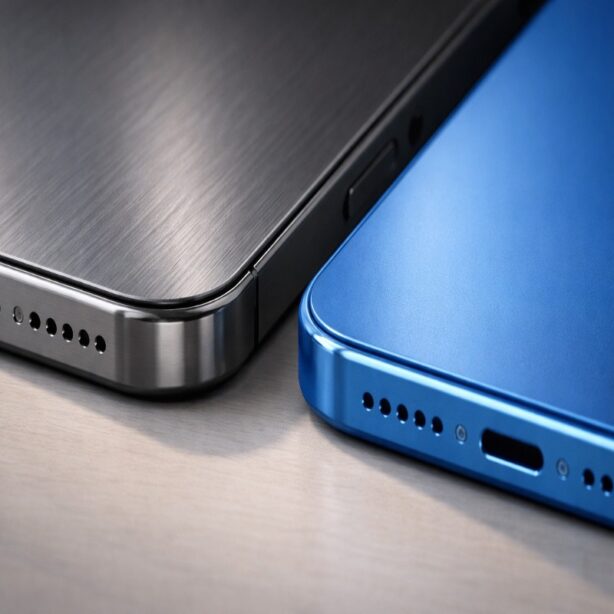
The iPhone 15 Pro uses a titanium design with a Ceramic Shield front and textured matte glass back. The iPhone 15 uses an aluminum design with a Ceramic Shield front and a color‑infused glass back.
What does that mean for you? The Pro tends to feel a bit more “serious” in the hand, and it’s also physically a bit smaller and heavier in a very specific way: the iPhone 15 Pro is 146.6 mm tall and 187 g, while the iPhone 15 is 147.6 mm tall and 171 g.
I’ll admit something mildly contradictory here: the Pro feels more premium, but the regular iPhone 15 can feel more comfortable for long stretches because it’s lighter. If you’re someone who reads a lot on your phone, or you’re constantly holding it one-handed while moving around, the weight difference isn’t imaginary.
The display difference you’ll actually notice: ProMotion
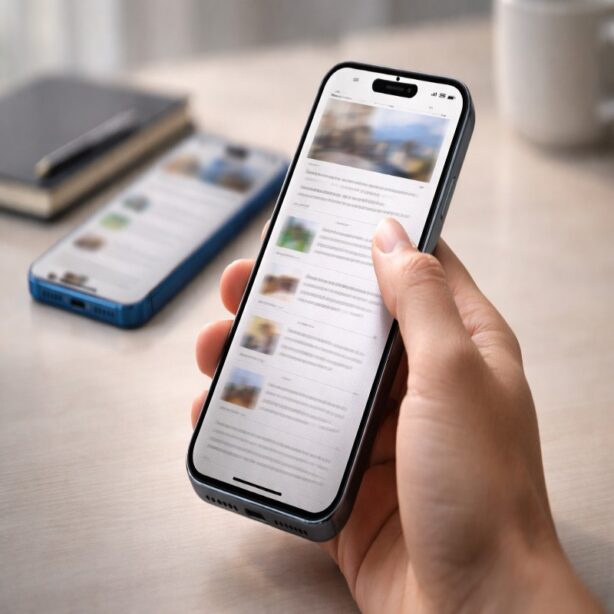
This is the easiest “Pro” advantage to feel, even if you don’t care about tech. The iPhone 15 Pro supports an Always‑On display and ProMotion with adaptive refresh rates up to 120Hz. The iPhone 15 does not list either of those features on Apple’s Tech Specs page.
If you’ve never used a 120Hz iPhone, it can sound like a small thing. And then you scroll. After that, it’s hard to unsee. Not everyone cares, but the people who care… really care.
Performance: A17 Pro vs A16 Bionic
The iPhone 15 Pro uses the A17 Pro chip (6‑core CPU, 6‑core GPU, 16‑core Neural Engine). The iPhone 15 uses the A16 Bionic chip (6‑core CPU, 5‑core GPU, 16‑core Neural Engine).
In real life, both are fast. The iPhone 15 is not “slow” by any normal standard. But the Pro has more headroom—especially if you game, edit video, or keep a phone for a long time and want it to feel less squeezed by future iOS updates.
There’s also a more strategic angle: Apple lists Apple Intelligence on the iPhone 15 Pro tech specs page. That doesn’t automatically mean it’s the only reason to buy the Pro, but it does mean the Pro is in a different category for certain on-device AI features as Apple expands them.
Camera: the most important reason to upgrade
This is where the “they look the same” illusion breaks. The iPhone 15 has a dual‑camera system: a 48MP Main camera (26 mm, ƒ/1.6) and a 12MP Ultra Wide (13 mm, ƒ/2.4), plus a 12MP 2x Telephoto option enabled by the quad‑pixel sensor (52 mm, ƒ/1.6).
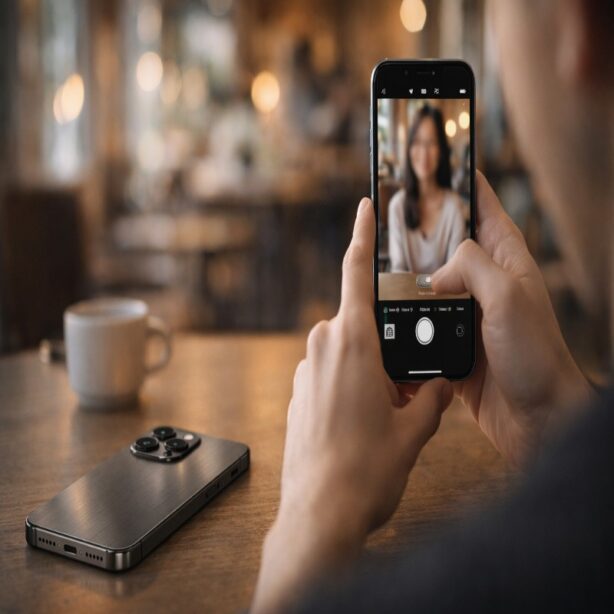
The iPhone 15 Pro has a Pro camera system: a 48MP Main (24 mm, ƒ/1.78), a 12MP Ultra Wide (13 mm, ƒ/2.2), a 12MP 2x Telephoto (48 mm, ƒ/1.78) enabled by the quad‑pixel sensor, and a 12MP 3x Telephoto (77 mm, ƒ/2.8).
That extra 3x Telephoto lens is not a “spec flex.” It changes what kinds of photos you can get without moving your feet. Portraits are the obvious example: that 77 mm look can be genuinely flattering, and it gives you more creative control when the background is busy.
Also, the iPhone 15 Pro lists macro photography and Apple ProRAW support. The iPhone 15 tech specs do not list macro photography or Apple ProRAW. If you like tinkering with images later, or you want the option to push edits harder, ProRAW is one of those features you don’t need until the day you really do.
If you’re torn and you want a deeper “camera-first” breakdown (including how storage choices affect video work), you’ll probably enjoy the longer guide: iPhone 15 Pro: a practical, honest deep dive.
Video creators: a quiet but real dividing line
The iPhone 15 supports 4K Dolby Vision video recording up to 60 fps and Cinematic mode up to 4K HDR at 30 fps. It’s a strong video phone.
The iPhone 15 Pro goes further: it supports ProRes video recording up to 4K at 60 fps with external recording, plus Log video recording and ACES.
I think this is where the Pro label becomes most “honest.” Most people won’t use ProRes. But if you do, you really do. And once you start caring about capture formats and color workflow, you’ll also start caring about file transfer speeds and storage management.
USB‑C: same connector, different speed
This part gets overlooked because, understandably, people see “USB‑C” and move on. But Apple lists the iPhone 15 Pro’s USB‑C connector as supporting USB 3 (up to 10Gb/s). Apple lists the iPhone 15’s USB‑C connector as supporting USB 2 (up to 480Mb/s).
If you mostly charge and occasionally move a few photos, it won’t matter. If you regularly offload big video files, especially ProRes, it can be the difference between “quick transfer” and “why is this taking forever?”
If you want help making the USB‑C side of things painless—cables, charging, what’s worth buying and what isn’t—this is the dedicated guide: iPhone 15 Pro USB‑C and charging.
Battery: close, with a small Pro edge
Apple’s stated battery numbers are close, but not identical. The iPhone 15 Pro is rated for up to 23 hours of video playback and up to 20 hours of streamed video playback. The iPhone 15 is rated for up to 20 hours of video playback and up to 16 hours of streamed video playback.
In plain terms, both are “good,” but the Pro has a little more margin. Whether that margin matters depends on how you use your phone. If you’re on 5G a lot, take lots of video, or run bright screen settings outdoors, you’ll feel the gap more.
Both support fast charging (up to 50% in around 30 minutes with a 20W adapter or higher, sold separately). Both also support MagSafe up to 15W, Qi2 up to 15W, and Qi up to 7.5W.
Connectivity: Wi‑Fi 6E is another Pro perk
On Apple’s tech specs pages, the iPhone 15 Pro lists Wi‑Fi 6E, while the iPhone 15 lists Wi‑Fi 6. Both list Bluetooth 5.3.
Wi‑Fi 6E can be a nice upgrade if your home or office network supports it and you live in a congested area. It’s not the kind of feature that sells phones, but it can reduce the little annoyances—buffering, slow uploads, and inconsistent speeds—when you’re doing real work on your phone.
Storage: don’t treat this as an afterthought
Apple lists iPhone 15 storage tiers as 128GB, 256GB, and 512GB. Apple lists iPhone 15 Pro storage tiers as 128GB, 256GB, 512GB, and 1TB.
Here’s the part I wish more people said plainly: if you’re buying the Pro because you want to shoot more video, you should probably also buy more storage than you think you need. Otherwise you end up with a “Pro” phone that constantly nags you to delete things. It’s not tragic, but it’s annoying.
If price is the deciding factor (and it often is), you can sanity-check typical deal patterns in this post: iPhone 15 Pro price in India.
So… which one should you buy?
If you want the simplest honest rule, it’s this: buy the iPhone 15 if you want a great everyday iPhone and you don’t care about ProMotion or a dedicated 3x Telephoto lens. It’s lighter, still bright, still fast, and the camera system is genuinely strong.
Buy the iPhone 15 Pro if you care about the smoother 120Hz experience, want more camera flexibility (especially 3x), expect to do more serious video work, or you’re thinking long-term and want more headroom. The USB 3 transfer speed support is also a quietly big deal for the right kind of user.
And if you’re still on the fence, I’d go back to the “why” question. Are you upgrading because your current phone is failing you, or because you want to do more with your phone? If it’s the second one, the iPhone 15 Pro tends to make more sense.
Either way, if you want the full, deeper context before you decide, this is the best place to start: iPhone 15 Pro: a practical, honest deep dive