Ensuring the integrity of pharmaceutical products is critical in today’s globally connected marketplace. Counterfeit medicines pose a severe threat to patient safety, company reputations, and public health. This challenge has driven the industry’s rapid adoption of serialization, a robust solution that offers enhanced protection for supply chains. As drug safety demands continue to evolve, pharma labeling technologies have become central to these initiatives, allowing manufacturers and distributors to track each product with unprecedented accuracy.
Serialization strategies require adding unique, traceable identifiers to drug packages. This process helps ensure that every pharmaceutical unit can be tracked throughout its entire lifecycle, from manufacturing to patient use. Such transparency is vital to preventing counterfeit drugs from entering the market and helps streamline recalls and regulatory compliance.
Regulatory authorities around the world have introduced strict mandates to support serialization and drug traceability. Growing consumer expectations for safe medications are also pushing companies to rethink how they manage and monitor their supply chains. These priorities are fostering a new standard of accountability and reliability within the pharmaceutical industry.
Early adopters of serialization have already witnessed its benefits, including more efficient recalls and better inventory management. For businesses yet to implement robust serialization, the advantages, including compliance, safety, and brand protection, are clear reasons to act now.
Understanding serialization
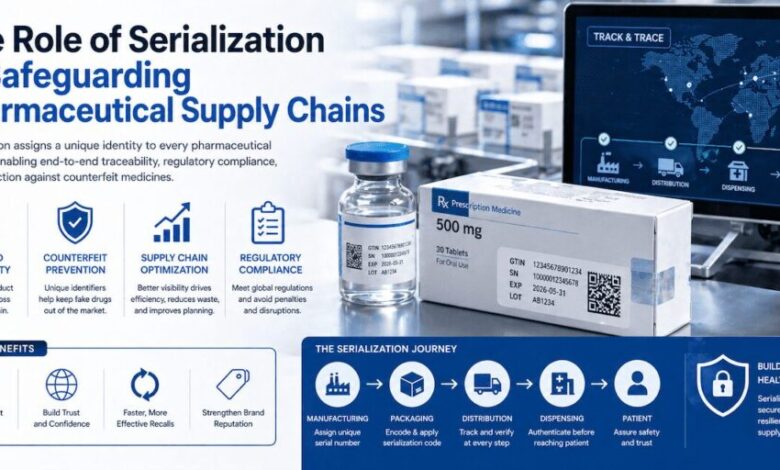
Serialization is the process of assigning a globally unique identifier to every individual pharmaceutical item. This identifier is maintained throughout the item’s journey through the supply chain and captured at key points, including manufacturing, packaging, distribution, and dispensing. The concept aims to guarantee complete visibility and provenance for each product reaching the consumer. Serialization systems often use scannable barcodes or radio-frequency identification (RFID) tags, enabling real-time verification and data collection throughout the supply chain.
This capability is crucial in a world where supply networks are frequently targeted by counterfeiters and where cross-border distribution adds layers of complexity. Serialization not only helps organizations identify defects or contamination swiftly but also serves as a major deterrent to counterfeit and diversion activities. It transforms manual record-keeping into a digital, auditable process that benefits regulators, manufacturers, and patients alike.
Regulatory drivers
Serialization mandates are now embedded in regulatory frameworks worldwide. Notable examples include the European Union’s Falsified Medicines Directive (FMD) and the United States’ Drug Supply Chain Security Act (DSCSA). Both require pharmaceutical companies to implement track-and-trace solutions, assign unique serial numbers to products, and ensure robust verification systems throughout the supply chain.
The European FMD enforces safety features on prescription drugs, such as tamper-evident packaging and unique product identifiers. The US DSCSA lays out a 10-year plan culminating in fully serialized supply chains by 2023 to secure the supply of prescription medications. Compliance with these regulations is no longer optional; companies must invest in serialization infrastructure or risk regulatory penalties and market access.
Benefits of serialization
- Enhanced traceability: Serialization enables real-time tracking of every product, making it easier to isolate and recall compromised batches. When a safety issue arises, manufacturers can respond quickly, limiting financial and reputational damage.
- Counterfeit prevention: The presence of unique identifiers makes it exceedingly difficult for counterfeit products to blend into legitimate supply chains. Each item’s journey can be verified at every stop, assuring patients and stakeholders of its authenticity.
- Supply chain optimization: With visibility comes control. Serialization creates rich data that organizations use for inventory management, demand forecasting, reducing wastage, and improving distribution logistics.
Challenges in implementation
- High implementation costs: Upgrading packaging lines, installing new software, and training staff can demand significant initial investment. However, the long-term returns through reduced fraud, fewer recalls, and improved efficiency often outweigh these expenses.
- Data management complexity: Serialization produces vast amounts of data. Securely capturing, storing, and transmitting this information requires sophisticated IT systems and cybersecurity protocols. Organizations must also manage data sharing with regulators and supply chain partners.
- Global compliance variability: Regulatory requirements vary by region, necessitating flexible systems that can adapt to each market’s specific rules. Navigating these intricacies adds an additional burden for multinational pharmaceutical companies.
Future trends
Serialization technology is evolving rapidly in response to new opportunities and threats. Blockchain is emerging as a powerful tool for ensuring data integrity and transparency, offering an immutable record of every transaction and movement within the supply chain. When combined with Internet of Things (IoT) sensors, companies can monitor environmental conditions, authenticate goods in real time, and get instant alerts about potential issues. These innovations promise even higher levels of safety, efficiency, and supply chain resilience in the coming years.
Conclusion
Serialization is transforming how the pharmaceutical industry safeguards its supply chain. Driven by regulatory requirements and an urgent need to protect patients, it offers unprecedented traceability, counterfeit deterrence, and operational insights. While challenges exist, the long-term benefits make serialization an indispensable strategy for any organization looking to thrive in the future of pharmaceutical manufacturing and distribution.