
Why Field Teams Need Reliable Communication When Every Minute Matters
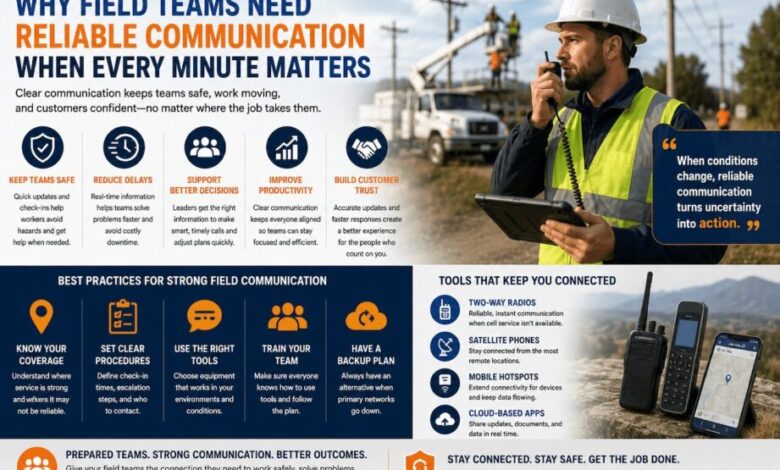
Field work rarely happens in perfect conditions.
A crew may be repairing a power line after a storm. A technician may be driving between remote service calls. A construction team may be working on a site where cell service comes and goes. A utility crew may be hours away from the office, trying to solve a problem before it affects hundreds of people.
On paper, the job might look simple. Get to the site. Do the work. Report back.
But anyone who has worked in the field knows it is never that neat.
Things change. Weather shifts. Equipment fails. Roads close. Instructions get updated. A small issue turns into something urgent. And when that happens, one thing becomes very clear.
Reliable communication is not just helpful. It can be the thing that keeps people safe, focused, and able to do their jobs well.
Because when every minute matters, silence is not just frustrating. It can become a real problem.
Field work moves fast, even when the plan looks simple
Most field teams start the day with a plan. There may be a route, a work order, a schedule, or a list of tasks that need to be finished before the day ends.
Then real life steps in.
A repair takes longer than expected. A customer gives new information. A road is blocked. A supervisor needs an update before approving the next step. A worker spots a safety concern that was not visible from the office.
That is normal field work.
The challenge is that decisions often need to happen while people are already on-site. A field team cannot always pause everything, drive back to the office, and wait for answers. They need to reach the right person quickly. They need instructions that are clear. They need to know whether to keep going, stop work, change direction, or call for support.
Think about it. How much harder does a routine task become when no one can get a message through?
It does not take much for confusion to spread. One person assumes the job is delayed. Another thinks the team is still moving forward. A supervisor is waiting for confirmation that never arrives. Meanwhile, the crew is standing around, losing time and trying to make the best decision with incomplete information.
Good communication keeps all of that from piling up.
It gives field teams a way to move with confidence instead of guessing. And in fast-moving environments, that confidence matters.
Communication is a safety tool, not just an office habit
It is easy to think of communication as paperwork, phone calls, status updates, and check-ins.
But for field teams, communication is much more than that. It is part of the safety system.
Many field workers spend their days in places where risk is built into the job. They may be near heavy equipment, electrical systems, unstable ground, water, traffic, extreme weather, or isolated terrain. Even experienced workers can face situations that change quickly.
That is why being able to reach someone matters.
A worker who gets injured needs a way to call for help. A crew that sees a hazard needs to warn others before someone walks into danger. A team working in a remote area needs regular check-ins so the office knows they are okay. And if a situation starts to feel wrong, workers need a fast way to speak up.
No one wants to imagine a person needing help and not being able to reach anyone.
But responsible planning means thinking about that possibility before it happens.
Reliable communication does not remove every risk. Nothing can. But it gives teams a stronger safety net. It helps people report problems earlier, respond faster, and avoid making decisions in isolation.
That matters because safety is not only about hard hats, cones, and written procedures. It is also about making sure people are not left alone when something changes.
Delays get expensive fast
Safety is the most important reason field teams need reliable communication, but it is not the only one.
Communication gaps also cost time. And time adds up quickly.
A crew may wait for approval because the manager cannot be reached. A technician may complete a repair, only to learn later that the customer needed something different. Equipment may be delivered to the wrong location because an update did not go through. Two teams may show up for the same task because no one confirmed who was handling it.
These are not dramatic problems at first. They sound like small mix-ups.
But small mix-ups become big delays when they happen over and over.
Field operations depend on movement. People, tools, vehicles, parts, and information all need to be in the right place at the right time. When communication breaks down, that movement slows. Teams start waiting. Managers start chasing updates. Customers start asking questions. Work that should feel organized starts to feel scattered.
And the frustrating part is that many of these delays are avoidable.
Clear communication helps everyone stay aligned. It gives field workers the information they need before they waste time. It gives supervisors visibility without needing to micromanage. It helps dispatchers adjust schedules when the day changes.
In other words, it keeps the work moving.
Not perfectly. Field work will always have surprises. But reliably enough that people can respond instead of scramble.
Remote locations make everything harder
Now add distance.
Many field teams do not work in areas with strong, steady cell service. They may be in rural communities, mountain regions, industrial sites, offshore locations, construction zones, forests, or places where infrastructure is limited.
Even in areas that usually have service, conditions can change. A storm can damage towers. Heavy network traffic can slow everything down. Buildings, terrain, and weather can interfere with signals. A worker may have coverage at one end of a site and lose it completely a few minutes later.
That is where communication planning becomes more serious.
It is not enough to assume phones will work everywhere. They often will. Until they do not.
For teams that regularly operate beyond dependable cell coverage, planning may include tools such as radios, satellite phones, mobile hotspots, and emergency communications backup systems so there is still a way to reach help, share updates, and keep work moving when standard networks are unavailable.
That kind of planning is not about overreacting. It is about being realistic.
If people are working in places where ordinary networks are unreliable, they need options. Simple as that.
Because the worst time to discover a communication gap is during the moment when someone urgently needs to send a message.
Trust grows when teams know they are supported
There is also a human side to all of this.
Field workers want to know that someone has their back. They want to feel like the office understands the reality of the job, not just the schedule on a screen. When communication is strong, workers feel more connected to the larger team. They know they can ask questions, raise concerns, and get support when they need it.
That builds trust.
And trust matters more than many people realize.
A crew that trusts its leadership is more likely to speak up early. A technician who feels supported is more likely to report a concern instead of trying to handle everything alone. A team that knows check-ins are taken seriously is less likely to feel forgotten when they are working far from everyone else.
Reliable communication sends a quiet message.
You are not out there alone.
That may sound simple, but it can change the way people work. It reduces stress. It creates a sense of backup. It helps workers focus on the task in front of them instead of wondering whether anyone would know if something went wrong.
And when people feel supported, they usually do better work.
Customers feel the difference too
Customers may never see the communication tools behind the scenes. They may not know how dispatchers, supervisors, and field crews are staying connected throughout the day.
But they notice the results.
They notice when a technician arrives on time because the schedule was updated properly. They notice when a crew can explain what is happening because they received clear instructions. They notice when a company provides accurate updates instead of vague promises. They notice when a problem gets solved faster because the right people were able to coordinate.
Good communication creates a calmer customer experience.
That matters, especially when customers are already stressed. Maybe their power is out. Maybe a delivery is delayed. Maybe a repair affects their business. Maybe they are waiting for a crew to fix something important.
In those moments, people do not expect everything to be perfect. But they do want honesty. They want updates. They want to feel like someone knows what is going on.
Field teams can only provide that kind of reassurance when they have reliable information themselves.
A worker cannot give a clear answer if no one has been able to reach them. A dispatcher cannot update a customer if the crew has gone silent. A manager cannot make a smart call if the latest field report never came through.
Communication behind the scenes becomes confidence at the customer level.
And confidence is something people remember.
A good communication plan should be practical
A communication plan does not need to be complicated to be useful.
In fact, the best plans are usually simple enough that people can follow them under pressure. If a system only works when everyone has plenty of time and perfect focus, it is probably not ready for real field conditions.
Field teams need tools and processes that make sense during a long day, in bad weather, with gloves on, while standing near equipment, or while trying to solve a problem quickly.
That means companies should think about the real places their teams work, not just the ideal version of the job. Where does cell service drop? Which sites are hardest to reach? Which tasks carry the most risk? Who needs to know when a worker arrives, leaves, or runs into trouble?
A strong plan should answer basic questions.
How do workers check in? What happens if someone misses a check-in? Who gets contacted first during a problem? What is the backup option if the main communication method fails? Does every worker know how to use the tools before they actually need them?
Training matters here.
You cannot hand someone a device during a crisis and expect everything to go smoothly. People need practice. They need to know what to do without digging through a manual or guessing which number to call.
The goal is not to create more rules for the sake of rules. The goal is to make communication feel natural, clear, and dependable.
That way, when the pressure rises, people are not trying to invent a process on the spot.
Reliable communication helps leaders make better decisions
Field leaders often have to make decisions with limited time.
Should the team continue working or stop for safety reasons? Should another crew be sent to help? Should the customer be updated now or after more information comes in? Should the schedule be changed to handle a higher priority job?
Those decisions are only as good as the information behind them.
When field communication is weak, leaders may be forced to rely on assumptions. And assumptions can be risky. They can lead to poor scheduling, unsafe choices, wasted resources, or frustrated workers who feel like leadership does not understand what is happening on the ground.
Reliable communication gives leaders a clearer picture.
It helps them see what teams are facing in real time. It allows them to adjust plans based on actual conditions, not outdated information. It also helps them support workers more effectively because they are not operating in the dark.
This does not mean leaders need constant updates every five minutes. Too much communication can become noise. The key is useful communication at the right moments.
A quick check-in. A clear status update. A photo from the site. A simple message that says, “We need approval before moving forward.”
Small pieces of information can prevent big mistakes.
Prepared teams respond instead of panic
Every field operation will face unexpected moments.
The difference is how ready the team is when those moments happen.
Teams with weak communication often lose time figuring out what to do next. Who should be called? Which channel should be used? Did anyone receive the message? Is the team safe? Does the customer know there is a delay?
That uncertainty creates stress.
Prepared teams still feel pressure, of course. They are human. But they have a path to follow. They know how to check in. They know how to escalate an issue. They know what to do if the first communication method does not work.
That structure helps people stay calm.
And calm matters when the situation is already difficult.
A clear communication plan does not make field work easy. It does not control the weather, fix roads, or prevent every equipment problem. But it gives teams a better way to respond when things do not go as planned.
Sometimes that is exactly what is needed.
Not perfection. Just a reliable way forward.
Communication is really about people
It is easy to talk about field operations in terms of systems, schedules, tools, and workflows.
But at the center of it all are people.
People driving long distances before sunrise. People standing in the rain trying to finish a repair. People working in remote areas where help is not always nearby. People making decisions with real consequences.
Reliable communication is one way companies show that those people matter.
It shows respect for their time. It protects their safety. It supports their judgment. It helps them do good work without feeling cut off from the rest of the organization.
And honestly, that is the heart of it.
Every minute matters because people matter.
A message sent at the right time can prevent confusion. A quick check-in can ease concern. A reliable connection can help someone get support when they need it most.
Field teams do not need communication because it looks good on a policy document. They need it because their work is real, unpredictable, and often important to the people depending on them.
Staying connected when it counts
Reliable communication may not be the most visible part of field operations. Customers may not see it. It may not stand out in a budget meeting. It may not feel urgent on a normal day when everything is running smoothly.
But when conditions change, it becomes one of the most important parts of the job.
It helps teams stay safe. It reduces delays. It keeps leaders informed. It improves customer trust. It gives workers confidence that they are supported, even when they are far from the office.
That is why field teams need reliable communication when every minute matters.
Because in the field, the right message at the right time can make the difference between confusion and clarity, delay and action, risk and response.
And sometimes, that difference is everything.