
What Are Some of the Things You Should Look For When Selecting The Right Bank?
I used to think choosing a bank was basically a “pick the one with the most branches” decision. Then I got older, busier, and (honestly) a little more allergic to surprise fees. That’s when it clicked: the “right” bank isn’t really about the brand. It’s about the day-to-day reality of how you use money—how you get paid, how you pay bills, how often you need cash, and how much patience you have for customer support loops.
So, if you’re here because you want a clear answer to what are some of the things you should look for when selecting the right bank? you’re in the right place. We’re going to walk through the practical stuff—fees, access, safety, digital tools, and the fine print—without pretending there’s one perfect option for everyone. If anything, a little “it depends” is the point.
One more thing before we start: if you’re deciding between a traditional bank, an online bank, or a credit union, it helps to know you’re comparing different trade-offs. Some institutions are built for convenience and breadth. Others win on rates and lower fees. And sometimes the best setup is… two accounts. That idea sounds messy until you try it.
How to use this guide (without overthinking it)
This is a long article on purpose. But you don’t have to do it all at once. If you want the quick version, skim the headings and pause at the sections that match your life right now: cash deposits, travel, building savings, or just “please stop charging me for everything.”
As you read, keep two questions in your head:
- What would annoy me enough to switch banks again in six months?
- What do I actually need this bank account to do, weekly, not “in theory”?
That’s the lens. Now let’s get specific.
what are some of the things you should look for when selecting the right bank?
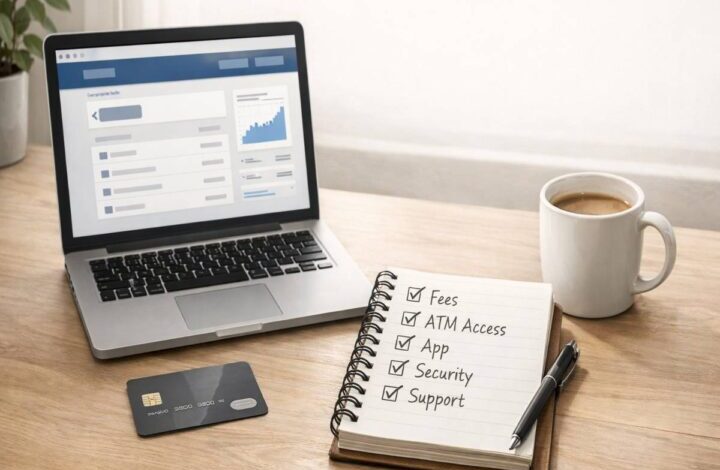
If you want a clean checklist, it usually comes down to: the true cost of using the bank, the convenience of access (cash, ATMs, branches), the quality of the app and tools, the safety of your deposits, and the human side—support when something breaks.
Those themes show up again and again in bank-selection guidance: start with your needs, avoid excessive fees, compare institution types, check digital features, read the terms, and look at reviews. It’s not glamorous, but it works.
Start with your “banking day” (a tiny self-audit)
I know this sounds like a personality quiz, but it’s surprisingly effective. Before you compare banks, get clear on what you’re actually doing with your money.
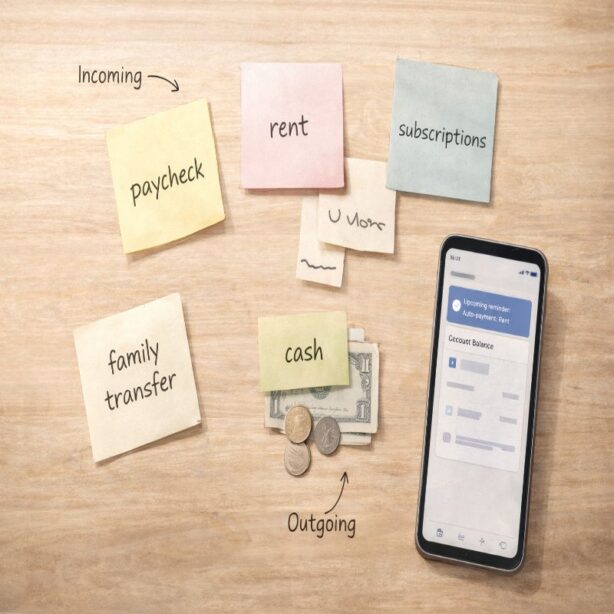
- Incoming money: Paycheck direct deposit, gig payments, regular transfers from another account, cash deposits.
- Outgoing money: Rent/mortgage autopay, utilities, subscriptions, credit card payments, transfers to family, occasional wires.
- Cash needs: Rare, weekly, or “I run a small business and cash is constant.”
- Support needs: You’re fine with chat, or you want a human on the phone, or you like having a branch as a backup.
If you’re building this into a system, keep a simple note on your phone for a week: how many times you open your banking app, how often you withdraw cash, and whether you ever step into a branch. People are often surprised by their own patterns.
And yes, you might realize you don’t need “a bank,” you need two: one account for daily spending and bill pay, and a separate place for savings where you’re less tempted to dip in.
If you want a quick, tactical version of this whole “fit” idea later, I’ll link to a scenario-based section below where you can match yourself to a bank type. For now, hold onto the patterns.

Fees: the cost you feel (and the cost you don’t notice)
Let’s talk about the part people hate admitting: sometimes the reason a bank feels “bad” is that it quietly drains you. Monthly maintenance fees. ATM fees. Overdraft fees. Non sufficient funds fees. Teller fees. Even small charges can add up in a way that’s hard to see unless you look.
Here are the fee categories to check first:
- Monthly maintenance fees: Is there one? If yes, how do you waive it (minimum daily balance, direct deposit, number of transactions)?
- Overdraft fees and policies: Can you be charged for spending more than you have? Do they offer ways to avoid it, like linking accounts or balance alerts?
- ATM fees: What happens when you use an out-of-network ATM? Do they reimburse fees, and if so, how much and under what conditions?
- “Service” fees: Wires, cashier’s checks, expedited transfers, paper statements, inactivity, stop payments.
Some guidance pegs average overdraft fees in the high twenties, and it’s a good reminder that overdraft isn’t a rare edge case—it’s a business model for some banks. The realistic goal isn’t “never make a mistake.” It’s “build an account setup where a mistake doesn’t cost you $30+ each time.”
If you want a deeper, fee-by-fee breakdown (plus a way to estimate what you’d actually pay in a year), you can read the related post here: what to look for when selecting the right bank fees. I’d argue fees are the #1 reason people regret their choice.
One practical trick: once you narrow to 2–3 banks, download or locate the fee schedule and the account agreement. Marketing pages are friendly; disclosures are honest. Boring, yes. But it’s where you find the “waive the fee if…” rules.
Access and convenience: branches, ATMs, and cash reality
Convenience sounds obvious until it isn’t. People don’t switch banks because a savings APY is 0.5% lower. They switch because they couldn’t find a fee-free ATM on a trip, or cash deposits became a hassle, or the nearest branch is always “temporarily closed.”
Look at convenience in layers:
- ATM network: Are there many in places you already go? Some banks rely on partner networks; some reimburse out-of-network fees.
- Branch access: Do you need it for cash deposits, cashier’s checks, notarization, complicated issues, or do you mostly want it as a backup?
- Deposit options: Mobile check deposit, cash deposits (if you need them), and how quickly funds become available.
- Transfer options: Internal transfers, external transfers, recurring transfers, and any limits that will annoy you later.
If you’re choosing an online bank, cash can be the sticking point. Many online banks don’t have branches, so depositing cash may require workarounds (like using certain ATMs, retail options, or moving money from another account). That’s not inherently bad—it just needs to match your life.
This is where people accidentally pick a “great” bank that’s wrong for them. A bank can be excellent on paper and still be a daily irritation.

Online bank vs traditional bank vs credit union (the trade-offs)
Choosing a type of institution is a shortcut that can save you hours.
Traditional (national) banks often offer a wide range of products and big ATM/branch networks, but they may come with higher fees and lower savings rates. That’s not always true, but it’s common enough to watch for.
Community or regional banks can feel more personal and sometimes have lower fees, but you might get fewer branches/ATMs and fewer specialized products.
Credit unions often compete on lower fees and better rates, but you may need to meet membership eligibility requirements, and some credit union apps lag behind the best bank apps. (Not all, though. It varies.)
Online banks tend to offer higher interest rates and lower fees because they don’t carry the overhead of branches. The trade-off is you lose in-person banking and, depending on the bank, cash deposit convenience.
If you want a focused guide on evaluating online banks—especially how to think about FDIC insurance, rates, fees, ATM access, customer service, and digital experience—use this related post: what to look for when selecting the right bank online vs traditional. It’s the same decision, just under a brighter light.
Here’s the mildly messy truth: I love online banks for saving. I’m less enthusiastic about them as someone’s only bank if they deal with cash often. But even that depends on where you live and what networks are nearby. Some people do just fine.
Rates and earnings: when interest matters (and when it’s a distraction)
Interest rates matter most for money you’re keeping aside—emergency funds, short-term goals, and savings you’re not constantly touching. In general guidance, high-yield savings accounts (often at online banks) tend to pay more than traditional brick-and-mortar savings accounts.
But don’t let a headline APY hypnotize you. A good rate is great. A good rate plus a pile of fees is… not great.
When you compare rates, check:
- Is the rate promotional or ongoing? Teaser rates can drop.
- Are there balance tiers? Some accounts pay the best rate only above a certain balance.
- Is it the APY? APY reflects compounding; it’s the number that helps you compare.
If your main need is a checking account for bills and spending, rate is often secondary to fees, reliability, and convenience. Not always—some places offer interest-bearing checking—but most people feel the difference more in avoided fees than earned pennies.
Safety: deposit insurance and basic security features
Let’s slow down here, because this is where trust lives.
In the US, deposits at an FDIC-insured bank are insured up to $250,000 per depositor, per bank, per ownership category. Credit unions have a similar structure through the NCUA. When guidance tells you to confirm FDIC or NCUA coverage, it’s not alarmist—it’s foundational.
If you’re new to banking (or helping someone else choose), the FDIC has a simple checklist approach that starts with “is the account insured,” then moves into fees, overdraft policies, ATM access, alerts, and online bill pay. It’s refreshingly practical.
But insurance is only one part of safety. You also want day-to-day security and fraud resilience:
- Two-factor authentication (2FA): Ideally app-based or token-based, not only SMS.
- Account alerts: Low-balance alerts, large transaction alerts, login alerts.
- Card controls: Ability to lock/unlock your debit card instantly.
- Clear dispute process: Easy way to report fraud, track status, and reach support.
If you want a dedicated, calmer walkthrough of the safety checks (including how to verify deposit insurance and what security features are worth caring about), read: what to look for when selecting the right bank safety.
A small, slightly paranoid habit I don’t regret: turning on transaction alerts. It’s a tiny interruption, but it keeps you close to what’s happening.
Digital experience: the app, the website, and the “small stuff”
Most banks can do the basics: check balances, transfer money, pay bills, deposit checks on mobile. The difference shows up in the details—how fast it loads, whether transfers fail silently, whether the interface makes sense when you’re tired, and whether alerts are configurable.
Look for digital features that reduce mistakes:
- Mobile check deposit that’s reliable, with clear hold times.
- Bill pay that’s easy to set up and track.
- Alerts you can customize (not just “on/off”).
- Spending insights if you’ll use them (some people love this; some ignore it).
One tip that feels obvious but is often skipped: check recent app reviews on the App Store / Google Play. Not because crowds are always right, but because patterns are revealing. “Crashes after update” is different from “I don’t like the color.”
Customer service: what happens when something goes wrong
If everything goes smoothly, almost any bank feels fine. Customer service only becomes “a feature” when you need it.
So check:
- Support channels: Phone, chat, email, in-app messaging.
- Support hours: Business hours only vs extended/24-7.
- Escalation path: Can you reach a specialist for fraud, disputes, wires, account locks?
Here’s a simple test that feels a little awkward, but it works: call with a basic pre-sales question. Ask about fee waivers or ATM reimbursements. If you can’t get a straight answer before you’re a customer, it doesn’t always improve afterward.
And, yes, you can read reviews. Just don’t treat one angry story as truth. Look for repeated complaints: “holds took forever,” “couldn’t reach support,” “account locked without warning.” Repetition is information.

Account terms: the fine print that changes everything
This is the section most people avoid. I get it. Account agreements aren’t exactly a relaxing read. But if you want to choose confidently, you need to know the rules that actually govern the account.
In particular, look for:
- How to waive monthly fees (and whether the requirements are realistic for you).
- ATM fee policies (out-of-network fees, refunds, partner networks).
- Overdraft settings and whether you must opt in for certain transactions.
- Funds availability / hold policies for deposits.
- Promotional terms (rates that drop, bonus requirements, deadlines).
If you’re someone who likes a clean process, print the disclosure or open it side-by-side with your notes and highlight only the things that can cost you money or block access. You’re not reading for literature. You’re scanning for traps.
A 15-minute bank comparison checklist (simple, not perfect)
This is the practical version. It’s adapted from common banking checklists that focus on insurance, monthly fees, overdraft fees, ATM fees, alerts, online bill pay, and whether convenient branches matter to you.
- Insurance: Is it FDIC-insured (bank) or NCUA-insured (credit union)?
- Monthly fees: What are they, and how do you waive them?
- Overdraft policy: What happens if you miscalculate once? Are there alerts, settings, or linked-account protections?
- ATM access: Fee-free network size, out-of-network fees, reimbursements.
- Cash deposits: Easy or annoying? (Be honest about your needs.)
- Digital basics: Bill pay, transfers, mobile deposit, card lock, alerts.
- Support: Hours, channels, reputation for resolution.
- Terms: Any “gotchas” in the agreement or fee schedule?
If you do only one thing: compare banks using the same checklist. Don’t let one bank’s marketing page set the agenda while another bank’s disclosure quietly wins by being cheaper and clearer.
Common scenarios: which bank tends to fit?
This is where we get a little more human. These aren’t strict rules. They’re patterns I’ve seen in how people actually use accounts.
If you mostly want to stop paying fees
Start by comparing low-fee checking options, especially those that make it easy to avoid monthly fees and don’t punish you for living slightly below a minimum balance sometimes. Online banks often compete hard here, but some credit unions and community banks can be surprisingly good too.
If your “fee pain” comes from overdrafts specifically, prioritize banks that offer alerts and cheaper overdraft protection methods (like linking accounts) or that have reduced/removed overdraft fees. And read the overdraft section in the agreement. It’s the difference between “I made a mistake” and “I paid rent twice.”
You’ll probably like the deeper fee guide here: what to look for when selecting the right bank fees.
If you’re saving seriously (emergency fund, goals, “don’t touch” money)
Consider a high-yield savings account, often offered by online banks, as long as it’s properly insured and the transfer experience is smooth. Many people keep checking at one institution for convenience and savings somewhere else for a better rate.
Just keep your setup simple enough that you don’t forget where your money is. I’ve seen people open three shiny accounts, then lose track of autopays and “which card is linked to what.” More isn’t always better.
If you travel a lot (or just hate card problems)
Convenience becomes a travel problem fast. Look for a bank with good fraud controls (quick card lock/unlock), strong alerts, and support you can reach outside of narrow business hours. ATM reimbursement policies also matter if you’re often pulling cash in unfamiliar places.
It’s worth testing how the bank handles a simple “I’m traveling” question. If the support response is slow now, it might be slower when you’re stressed and on a deadline.
If you deal with cash often
This is where branches or cash-friendly deposit options matter. Many online banks are excellent, but cash deposits can be the awkward part. If cash is frequent, a local branch network or a reliable cash deposit method is less “old-fashioned” and more “practical.”
That said, some people keep a small local account purely for cash deposits and move money electronically to their main bank. It’s not elegant, but it’s effective.
If you want everything in one place (loans, cards, multiple accounts)
A larger institution can be convenient if you want checking, savings, CDs, credit cards, and possibly future loans under one roof. The trade-off is you’ll want to watch fees more carefully and compare rates, because convenience sometimes comes at a price.
If you go this route, treat it like a relationship: you can like the convenience and still demand fair terms. Read the disclosures. Ask questions. Don’t assume loyalty is rewarded.
How to switch banks without creating chaos
Switching banks feels like a hassle mostly because of “invisible connections”: direct deposit, autopays, and subscriptions you forgot exist. The good news is you can make it boring and controlled.
Here’s a simple switching plan:
- Open the new account and set up online access, alerts, and security settings right away.
- Move your income first (direct deposit or recurring transfers). Confirm at least one deposit lands.
- Move bills next: prioritize the essentials (rent, utilities, insurance), then subscriptions.
- Keep the old account open briefly with a small buffer until you’re confident nothing else is pulling from it.
- Close the old account only when you’re sure you’re done—and confirm any closure requirements.
You will forget one subscription. I think almost everyone does. Keeping the old account open for a short overlap period prevents that mistake from turning into late fees.
Choosing with confidence (not perfection)
The “right” bank is the one that fits your routine, doesn’t nickel-and-dime you, protects your deposits with proper insurance, and supports you when things go sideways. If you take nothing else from this, take the idea that you’re allowed to choose based on your real habits, not the bank’s marketing story.
And yes, to come full circle: what are some of the things you should look for when selecting the right bank? Look for low and transparent fees, reliable access (ATMs/branches/cash options), a solid app experience, insured deposits, reasonable account terms, and customer support that feels like it’s actually there. Maybe you’ll choose one institution. Maybe you’ll choose two. Either way, you’ll be choosing on purpose, which is the whole point.